

Explore our new Cybersecurity Terms Glossary, explained by our experts.

Explore our new Cybersecurity Terms Glossary, explained by our experts.
Cybersecurity Terms Glossary
A Silver Ticket attack forges a Kerberos service ticket using a stolen service account key, granting access to one service without the domain controller ever seeing the request.
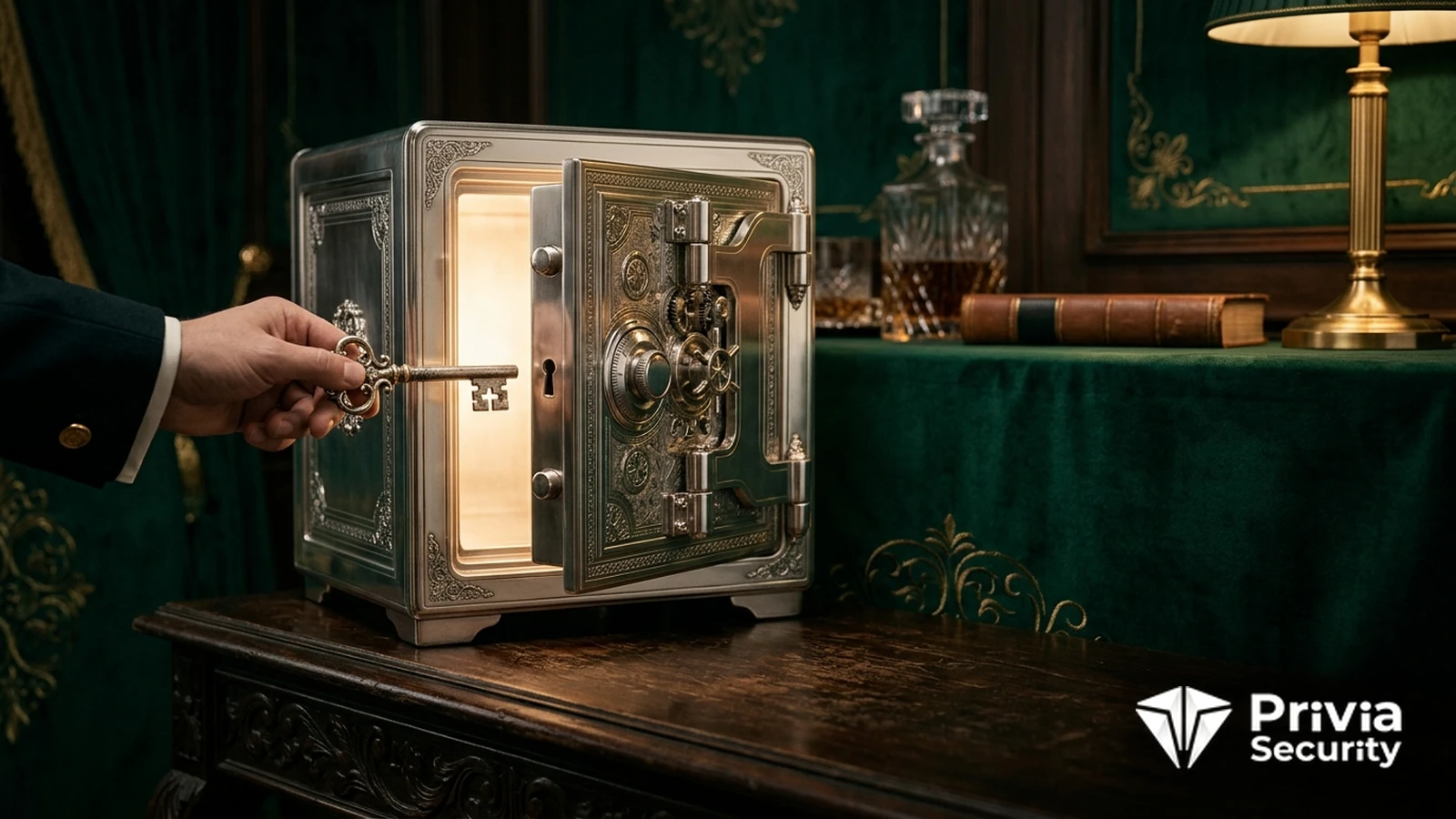
What Is a Silver Ticket Attack?
A Silver Ticket attack is a Kerberos ticket forgery in which an attacker who already holds the password hash of a service account or computer account mints their own service ticket for that one service. The ticket is never issued by a domain controller: the service decrypts it with its own key, reads the Privilege Attribute Certificate (PAC) inside, and grants whatever access the PAC claims.
MITRE ATT&CK catalogues the technique as T1558.002. Compared with its louder relative, the Golden Ticket attack, a Silver Ticket is narrow in scope but far harder to spot, because the domain controller logs nothing at all.
To build one, an attacker needs five things:
cifs/fileserver.example.local;Everything except the key is public information. The key is the only secret, and there are several ways to obtain it: Kerberoasting a service account with a weak password, dumping the local SAM or LSASS memory on a compromised server, or reading a machine account hash from the registry of a host the attacker already owns. Impacket’s ticketer.py and Mimikatz both automate the forgery itself.
In normal Kerberos authentication, a client asks the Key Distribution Centre for a service ticket and receives one encrypted with the service account’s key. The service cannot verify the PAC on its own; it trusts that only the KDC could have produced a ticket that decrypts correctly. PAC validation, in which the service calls back to a domain controller to check the signature, is skipped for services running as SYSTEM or with SeTcbPrivilege, which covers most of them.
That assumption is what the attack breaks. Because the request never reaches a KDC, there is no event 4768 or 4769 on any domain controller, and the only trace is a successful logon on the target server itself.
A Silver Ticket unlocks one SPN, but some services are worth far more than others:
Because a computer account owns HOST, CIFS, and RPCSS on its own machine, stealing a single machine account hash effectively hands the attacker SYSTEM on that server and a convenient foothold for further lateral movement.
Hunting for Silver Tickets means comparing two sources that should always agree:
Enabling Kerberos PAC validation through the ValidateKdcPacSignature setting closes much of the gap at a small performance cost. More significant is Microsoft’s PAC signature hardening (KB5020805), enforced from November 2023, which adds a signature only the KRBTGT key can produce, so a classic Silver Ticket forged with a service key alone is rejected by patched services.
Move service accounts to group managed service accounts, which rotate long random passwords automatically and make Kerberoasting pointless. Leave automatic machine account password rotation enabled; the 30-day default limits how long a stolen computer hash stays useful. Disable RC4 across the domain so that AES keys, which are much harder to recover offline, are the only option. Keep domain controllers and member servers current with Kerberos hardening updates, and treat any server where a service hash can be dumped as a tier-0 asset.
At Privia Security, our Red Team Services forge Silver Tickets during Active Directory engagements to show which servers would fall silently, and which of your detections would actually fire.
A Golden Ticket is forged with the KRBTGT account key and produces a ticket-granting ticket that works across the whole domain. A Silver Ticket is forged with one service or computer account key and produces a service ticket for that single service. The Golden Ticket is far more powerful, but the Silver Ticket is quieter because it never contacts a domain controller.
Not directly, because no ticket request reaches the KDC. Detection has to come from the target service itself: a successful logon on a member server with no corresponding 4769 event on any domain controller is the classic signal. Correlating member server logs with domain controller Kerberos logs in a SIEM is the only reliable way to surface that gap.
Yes. The forged ticket is encrypted with the key derived from the service account password, so resetting that password makes every existing Silver Ticket undecryptable by the service. For computer accounts, the automatic 30-day rotation does the same job. After a confirmed compromise, reset the affected service and machine account passwords as part of containment.
They remove the most common route to the key. A gMSA password is a long random value rotated automatically, so it cannot be cracked offline after Kerberoasting. An attacker who gains SYSTEM on a host allowed to retrieve the gMSA password can still read it, so gMSAs reduce the attack surface rather than eliminating the technique.
You May Be Interested In These


Cybersecurity Terms
17 November 2026
What Is a Cloud-Native Application Protection Platform?
Read More
We use a few cookies that are needed to make this website work, and they are always on. We would also like to set analytics cookies, to see which pages are useful; functional cookies, so that our live chat works; and advertising cookies, to measure our campaigns. We will not set any of those until you say yes, and you can change your mind at any time from the Cookie Settings link in the footer.
Choose the cookies you are happy for us to use. Strictly necessary cookies are always on; everything else is off until you turn it on.
These cookies keep the website working: they hold your security checks, your form submissions and the choice you make here. The site cannot run without them, so they are always on.
These let our live chat open and remember your conversation, and let the newsletter sign-up work. Switch them off and the chat window will not appear.
These tell us which pages are read and how people find us, so that we can improve the site. The reports are about groups of visitors, never about you personally.
These let us measure our advertising and show you our adverts on other websites, such as LinkedIn, Google and Meta. Switch them off and you will still see adverts, but they will be less relevant.


