

Explore our new Cybersecurity Terms Glossary, explained by our experts.

Explore our new Cybersecurity Terms Glossary, explained by our experts.
Cybersecurity Terms Glossary
A botnet is a network of compromised computers, servers, or IoT devices controlled remotely by an attacker and used for DDoS attacks, spam, credential stuffing, and fraud.
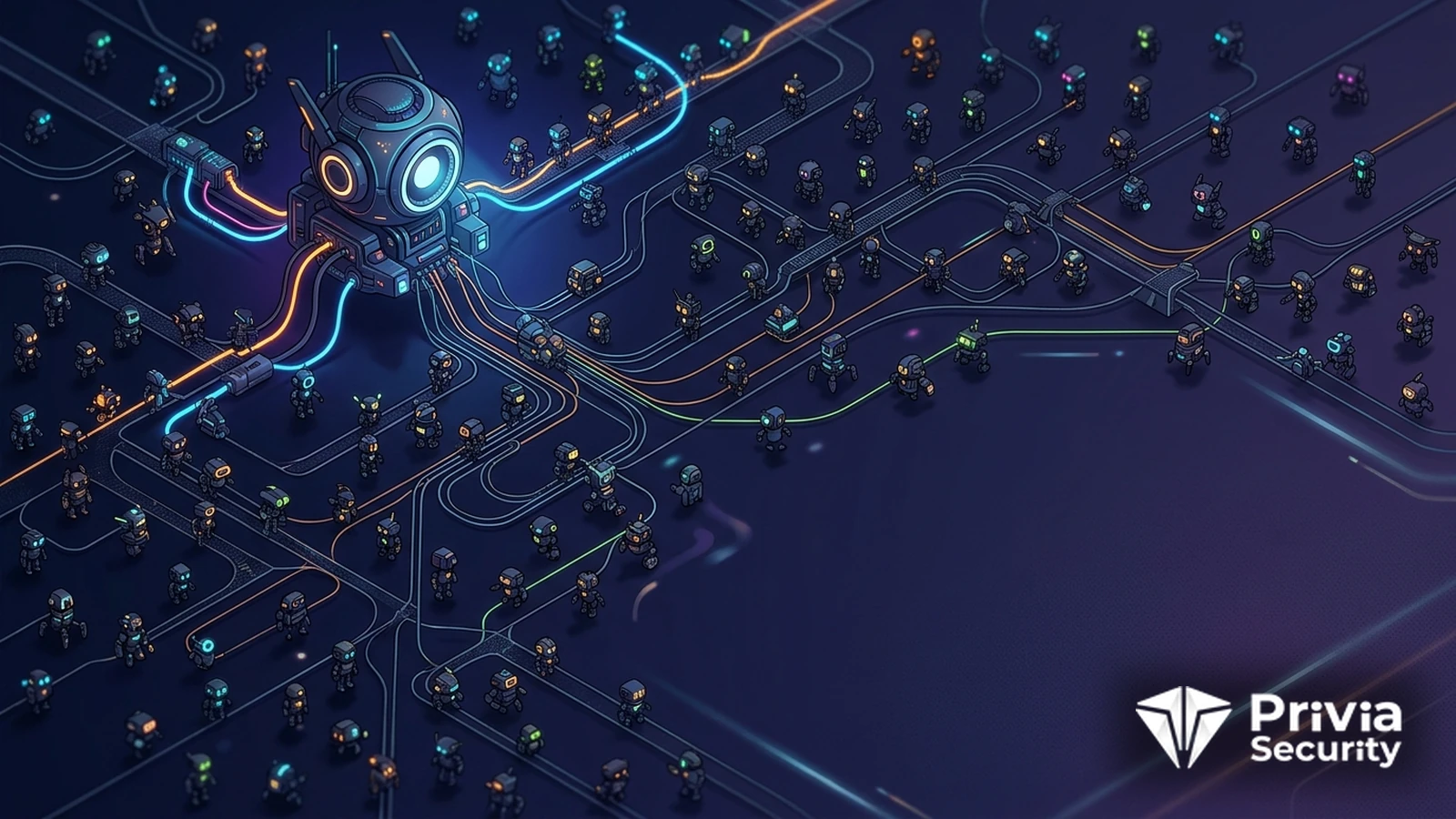
What Is a Botnet?
A botnet is a collection of internet-connected devices—PCs, servers, routers, cameras, and other smart devices—that have been infected with malware and can be controlled remotely as a group. Each compromised device is a “bot”, and the person or group in charge is often called the bot herder. Individually, a hijacked webcam is trivial; tens of thousands acting together can knock major services offline, send millions of spam emails, or test stolen passwords at enormous scale.
| Model | How it works | Weakness for the operator |
|---|---|---|
| Centralised | Bots poll one or a few servers, historically over IRC and now usually HTTPS | Seize or sinkhole the servers and the botnet goes quiet |
| Peer-to-peer | Bots relay commands to one another with no single control server | Harder to build and maintain, but much harder to take down |
| Domain generation algorithms | Bots calculate thousands of possible domain names each day; the operator registers only a few | Researchers who reverse the algorithm can pre-register domains |
Conficker, which spread widely from late 2008, made domain generation algorithms famous, while GameOver Zeus used a peer-to-peer design until an international operation disrupted it in 2014.
In 2016, the Mirai botnet showed what insecure IoT devices could do at scale. It scanned the internet for cameras and routers still using a short list of factory-default usernames and passwords, and on 21 October 2016 it was used against the DNS provider Dyn, making major sites including Twitter, Netflix, and Reddit unreachable for many users. Mirai’s source code was published shortly before, and its descendants are still active today, targeting newer device flaws as well as default credentials.
The UK responded to this class of problem with legislation. Under the Product Security and Telecommunications Infrastructure (PSTI) regime, in force since 29 April 2024, manufacturers of consumer connectable products sold in the UK must not use universal default passwords, must publish a way to report vulnerabilities, and must state how long the product will receive security updates.
Law enforcement has had notable successes. Emotet was disrupted by a Europol and Eurojust-coordinated operation involving UK and other national agencies in January 2021, although it re-emerged later that year. In August 2023, an FBI-led operation took down Qakbot and removed its malware from infected computers. Operation Endgame, coordinated by Europol in May 2024, targeted several malware loaders at once. Each action helps, but the underlying infections and the criminals’ skills tend to survive.
Change default credentials on every device, patch internet-facing systems and network equipment promptly, and avoid exposing management interfaces such as Telnet, SSH, or web admin panels to the internet. Filter outbound traffic as well as inbound, use a protective DNS service to block known malicious domains—the NCSC provides one for the UK public sector—and segment IoT devices away from business systems. Endpoint detection and network monitoring catch the beaconing that most bots produce. Our Managed Security Services (MDR) watch for exactly these patterns around the clock, so an infected device is isolated before it is put to work.
Infected machines often show few obvious symptoms. Warning signs include unexplained slowness, unfamiliar processes, network activity when the device should be idle, and security software being disabled. In a business, the clearest evidence usually comes from network monitoring: regular connections to unknown hosts, unusual DNS queries, or abuse reports from your internet provider about traffic from your IP addresses.
Owning an infected device is not a crime in itself; you are a victim. Building, controlling, or renting a botnet is an offence under the Computer Misuse Act 1990 in the UK. However, organisations that leave devices insecure may face regulatory questions, particularly if poor security also leads to a personal data breach under UK GDPR.
Many IoT devices have historically shipped with default passwords, rarely receive security updates, and run continuously with a direct internet connection. Owners seldom monitor them, so infections go unnoticed for long periods. The UK PSTI regime now bans universal default passwords for consumer products, but older devices already in homes and offices remain vulnerable.
A botnet is the infrastructure: a network of compromised devices under an attacker’s control. A DDoS attack is one of the things that infrastructure can be used for, sending floods of traffic from many sources to overwhelm a target. Botnets also send spam, steal credentials, deliver other malware, and provide anonymous proxies for criminals.
You May Be Interested In These


We use a few cookies that are needed to make this website work, and they are always on. We would also like to set analytics cookies, to see which pages are useful; functional cookies, so that our live chat works; and advertising cookies, to measure our campaigns. We will not set any of those until you say yes, and you can change your mind at any time from the Cookie Settings link in the footer.
Choose the cookies you are happy for us to use. Strictly necessary cookies are always on; everything else is off until you turn it on.
These cookies keep the website working: they hold your security checks, your form submissions and the choice you make here. The site cannot run without them, so they are always on.
These let our live chat open and remember your conversation, and let the newsletter sign-up work. Switch them off and the chat window will not appear.
These tell us which pages are read and how people find us, so that we can improve the site. The reports are about groups of visitors, never about you personally.
These let us measure our advertising and show you our adverts on other websites, such as LinkedIn, Google and Meta. Switch them off and you will still see adverts, but they will be less relevant.


