

Explore our new Cybersecurity Terms Glossary, explained by our experts.

Explore our new Cybersecurity Terms Glossary, explained by our experts.
Cybersecurity Terms Glossary
Microsoft Advanced Threat Analytics (ATA) analysed Active Directory authentication traffic to detect attackers inside the network. Mainstream support ended on 12 January 2021, and Defender for Identity replaced it.
What Is Microsoft ATA (Advanced Threat Analytics)?
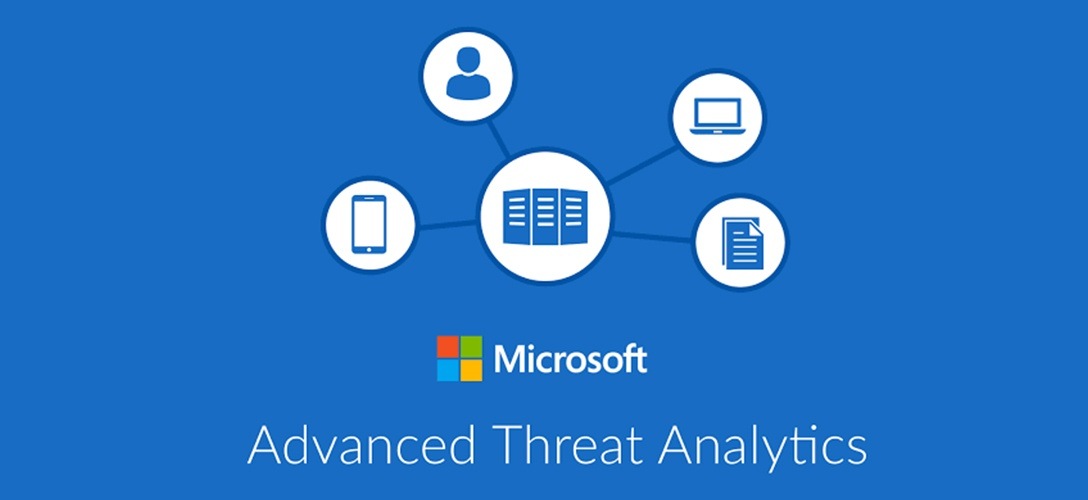
Microsoft Advanced Threat Analytics (ATA) was an on-premises platform that watched Active Directory authentication traffic and raised alerts when it recognised the behaviour of an attacker who was already inside the network. ATA is no longer a current product: mainstream support ended on 12 January 2021, and Microsoft Defender for Identity is its supported successor.
ATA came out of Microsoft’s 2014 acquisition of the Israeli security firm Aorato and reached general availability in August 2015. What set it apart at the time was that it needed no agents on user endpoints and no hand-written correlation rules. It learned what authentication normally looked like in a given domain, then reported what did not fit.
A deployment had two parts. The ATA Center, a Windows server with its own database, performed the analysis and hosted the console. ATA Gateways collected the traffic. You could deploy a standalone gateway that received a copy of domain controller traffic through port mirroring on a switch or hypervisor, or an ATA Lightweight Gateway installed on the domain controller itself, which removed the mirroring requirement at the cost of a small share of the controller’s resources.
The gateways parsed the protocols that identity depends on—Kerberos, NTLM, DNS, RPC, and LDAP—and sent the extracted metadata to the Centre. ATA also consumed Windows security events, either directly or relayed from a SIEM, because some details never appear on the wire. Over a learning period of roughly three weeks it built a profile of each user, device, and resource, and compared live activity against that profile.
Detections were grouped along the stages of an intrusion rather than by log source:
Alerts were presented on an attack timeline that joined the affected accounts and machines together, which made them readable by analysts who were not Active Directory specialists. Honeytokens—dormant accounts that no legitimate process should ever touch—could be defined so that any authentication attempt against them was flagged at once.
Version 1.9 was the final release. Mainstream support ended on 12 January 2021, and extended support—security fixes only, with no new detections—ended on 12 January 2026. Development had already moved to Azure Advanced Threat Protection, announced in 2018 and renamed Microsoft Defender for Identity in 2020.
Defender for Identity keeps the same model of sensors on domain controllers analysing authentication behaviour, but the analysis runs as a cloud service, so detection logic is updated continuously and identity signals are correlated with endpoint, email, and cloud application telemetry inside Microsoft Defender XDR. It also covers Active Directory Federation Services, Active Directory Certificate Services, and Entra Connect, none of which ATA monitored.
An ATA deployment that is still collecting traffic is a liability as much as a control. It gains no new detection logic, so techniques published since 2021 pass it quietly, and the ATA Center is a Windows server holding highly sensitive directory metadata. NCSC guidance on obsolete products is blunt about the risk of keeping unsupported software in service, and under Article 32 of the UK GDPR an organisation that suffers an identity-based breach while relying on a retired detection product will find it hard to argue that it had appropriate technical measures in place.
Migration is usually straightforward: deploy Defender for Identity sensors to the same domain controllers, run both products in parallel while the new alerts are tuned, then decommission the gateways, the Centre, and its database. Microsoft publishes a move guide, and the sensor is included in several Microsoft 365 E5 and Enterprise Mobility + Security licences that organisations often already hold.
Neither ATA nor its successor stops an attack on its own; it tells you that one is under way. The alerts are worth having only if a security operations centre is watching them and the directory underneath is hardened—tiered administration, least privilege, group managed service accounts, and periodic review of who holds replication rights. If your team is building that capability, our SOC maturation services cover the detection content, processes, and escalation paths that turn identity alerts into a response.
You May Be Interested In These



We use a few cookies that are needed to make this website work, and they are always on. We would also like to set analytics cookies, to see which pages are useful; functional cookies, so that our live chat works; and advertising cookies, to measure our campaigns. We will not set any of those until you say yes, and you can change your mind at any time from the Cookie Settings link in the footer.
Choose the cookies you are happy for us to use. Strictly necessary cookies are always on; everything else is off until you turn it on.
These cookies keep the website working: they hold your security checks, your form submissions and the choice you make here. The site cannot run without them, so they are always on.
These let our live chat open and remember your conversation, and let the newsletter sign-up work. Switch them off and the chat window will not appear.
These tell us which pages are read and how people find us, so that we can improve the site. The reports are about groups of visitors, never about you personally.
These let us measure our advertising and show you our adverts on other websites, such as LinkedIn, Google and Meta. Switch them off and you will still see adverts, but they will be less relevant.


