

Explore our new Cybersecurity Terms Glossary, explained by our experts.

Explore our new Cybersecurity Terms Glossary, explained by our experts.
Cybersecurity Terms Glossary
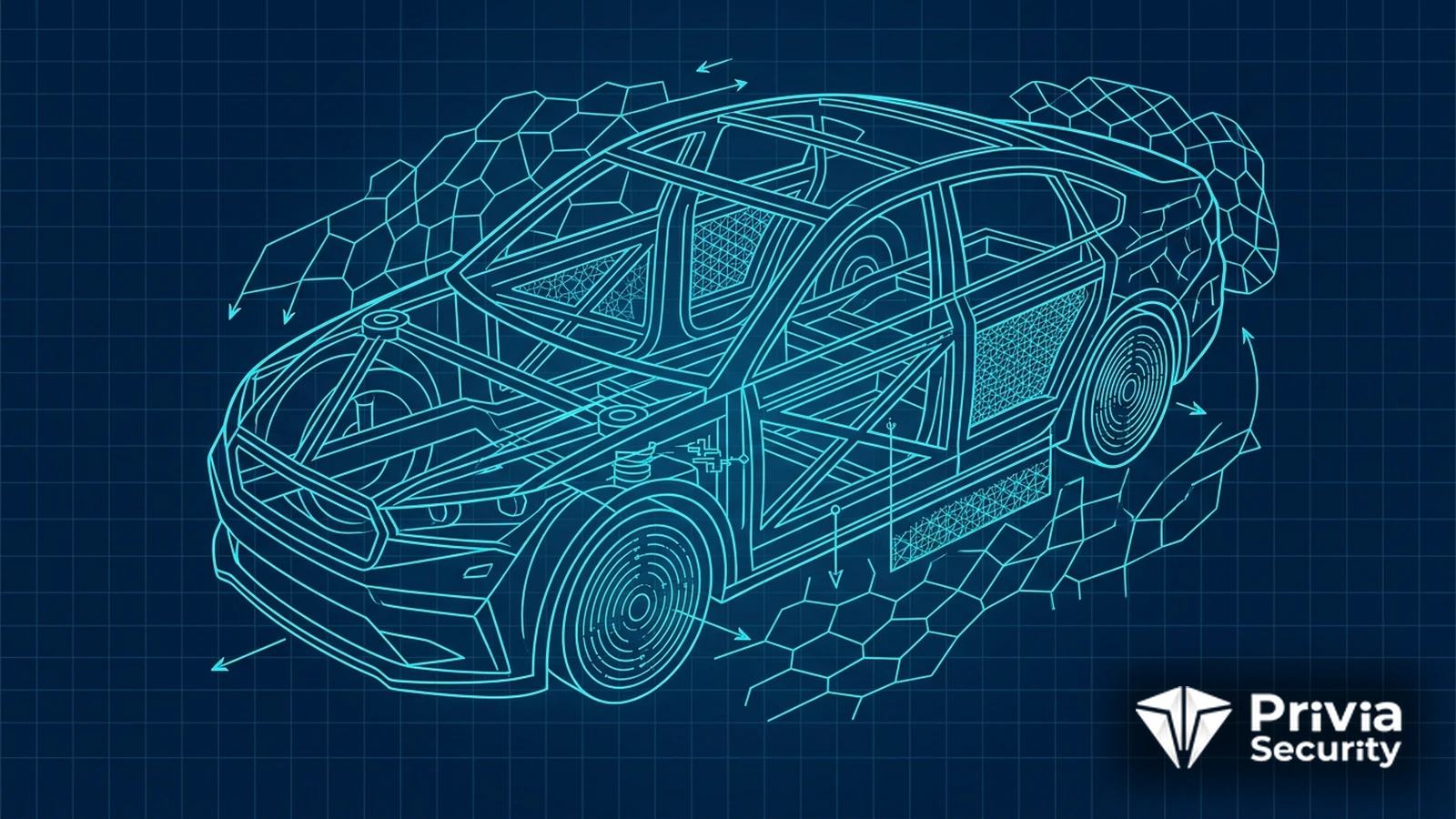
ISO/SAE 21434 is the cybersecurity engineering standard for road vehicles, defining the processes a manufacturer or supplier must run from concept through production to decommissioning.
What Is ISO/SAE 21434?
ISO/SAE 21434, titled Road vehicles — Cybersecurity engineering, was published in August 2021 as a joint product of the International Organization for Standardization and SAE International. It does for vehicle security what ISO 26262 did for functional safety: it describes the engineering process, the evidence that process must generate, and the organisational arrangements around it, without prescribing a single technical control.
That last point is the usual source of disappointment. Nobody reading it will find a requirement to encrypt the CAN bus or to use a particular key length. What they will find is an obligation to understand the threats to a specific item, to decide what risk is acceptable, to justify the decision, and to carry that justification through to the vehicles on the road.
The method at the centre of the standard is usually abbreviated to TARA, and it runs in a defined sequence. Identify the assets of the item and what each needs in terms of confidentiality, integrity, and availability. Identify the damage scenarios that result when those properties fail. Rate the impact of each across four categories: safety, financial, operational, and privacy. Identify the threat scenarios that lead to each damage scenario, build attack paths, and rate the feasibility of each path by the effort, expertise, equipment, and window of opportunity it demands. Combine impact and feasibility into a risk value from one to five, then decide: avoid, reduce, share, or retain.
Cybersecurity Assurance Levels, from CAL1 to CAL4, appear in an informative annex as a way of scaling the rigour of development activity to the risk. They are not mandatory and are applied unevenly across the industry.
The output of all this is the cybersecurity case: a structured argument, supported by work products, that the item is adequately secure for its intended use. It is the deliverable that gets audited, and the one that most organisations underestimate.
The commercial driver is type approval. UNECE Regulation No. 155 requires a vehicle manufacturer to hold a certified Cyber Security Management System covering the vehicle lifecycle, and Regulation No. 156 requires an equivalent Software Update Management System. Both applied to new vehicle types from July 2022 and to all newly produced vehicles from July 2024, and the United Kingdom gives them effect through its own type approval arrangements. The regulations state what must be demonstrated; ISO/SAE 21434 is the recognised means of demonstrating it, which is why the standard spread through the supply chain faster than any voluntary standard would have.
Suppliers feel this through the interface agreement. A tier one component maker that cannot produce a threat analysis, a security concept, and vulnerability management evidence will not be designed into the next platform, regardless of what its hardware does.
ISO 24089 covers software update engineering in the detail that R156 implies. ISO 26262 handles functional safety, and the two interact: a security risk with a safety impact feeds the safety analysis, and a safety mechanism may itself be a security target. The technical realities underneath are the subject of CAN bus security and over-the-air update security, and the integrity of delivered software depends on a verified firmware signing chain. Readers who know industrial standards will notice that the shape closely resembles IEC 62443-4-1, which addresses the same problem for industrial products: process, evidence, and a commitment that outlives the sale.
Fleet operators and infrastructure owners are increasingly affected too, since connected vehicles, telematics platforms, and aftermarket devices all sit inside the same risk picture.
At Privia Security, we support vehicle and component teams with threat analysis and practical testing through our Hardware Penetration Test Services.
The standard itself is voluntary, but what it supports is not. UNECE Regulation No. 155 requires manufacturers to hold a certified Cyber Security Management System for type approval, applying to new types from July 2022 and all new vehicles from July 2024, and the United Kingdom applies it through its own type approval scheme. ISO/SAE 21434 is the recognised way to demonstrate compliance.
Threat analysis and risk assessment: the method at the centre of the standard. It identifies assets and damage scenarios, rates impact across safety, financial, operational, and privacy categories, builds attack paths and rates their feasibility by required effort, expertise, equipment, and opportunity, then combines the two into a risk value and a documented treatment decision.
A structured argument, supported by the work products generated through development, that an item is adequately secure for its intended use. It is the central deliverable for audit under the standard and for type approval evidence, and it must be maintained as the design changes rather than assembled at the end of the project.
Yes, through the Cybersecurity Interface Agreement, which allocates activities and responsibilities between the vehicle manufacturer and each supplier in the chain. In practice suppliers are asked for threat analyses, security concepts, verification evidence, and vulnerability management commitments as a condition of being designed into a platform.
You May Be Interested In These



We use a few cookies that are needed to make this website work, and they are always on. We would also like to set analytics cookies, to see which pages are useful; functional cookies, so that our live chat works; and advertising cookies, to measure our campaigns. We will not set any of those until you say yes, and you can change your mind at any time from the Cookie Settings link in the footer.
Choose the cookies you are happy for us to use. Strictly necessary cookies are always on; everything else is off until you turn it on.
These cookies keep the website working: they hold your security checks, your form submissions and the choice you make here. The site cannot run without them, so they are always on.
These let our live chat open and remember your conversation, and let the newsletter sign-up work. Switch them off and the chat window will not appear.
These tell us which pages are read and how people find us, so that we can improve the site. The reports are about groups of visitors, never about you personally.
These let us measure our advertising and show you our adverts on other websites, such as LinkedIn, Google and Meta. Switch them off and you will still see adverts, but they will be less relevant.


