
Privia Security was chosen as one of Türkiye's fastest growing companies!

Privia Security was chosen as one of Türkiye's fastest growing companies!
Sophisticated attacks and data breaches by cyber criminals threaten both individuals and organisations. Our personal information, financial data and trade secrets are being put at risk. For this reason, it is extremely important to have cyber security awareness and to take the right precautions. However, cyber security does not only require individual effort; it also requires cooperation between companies and governments. A strong partnership and coordination are essential for the protection of digital infrastructure. This will provide a more effective way to prevent and combat cyber attacks. At this point, the most important problem we face is qualified human resources.
At the same time, cyber security is a responsibility that falls on everyone. While enjoying the opportunities offered by the internet and the digital world, prioritising security and effectively dealing with cyber threats is our common duty. The human resources need of our sector and the Cyber War Academy we have established in this regard has been met with great interest this year as always.
The intense interest shown by students in your cyber security internship programme, which received 2,499 applications during the one-month application period, has revealed that young talents who wish to work in the field of cyber security in the future are looking for an exciting opportunity. With these statistics, we continue to demonstrate how seriously we take our mission of training qualified experts and our determination to contribute to the sector, and we are pleased to share with you the application statistics of our Cyber War Academy programme.
As Privia Security, with the in-house programme we organise, we aim to go beyond classic internship approaches by offering applied training and providing real hacking experience in simulation environments. We would like to announce to you that the programme we offer with this mission has received great interest and we have received 2,499 applications from 182 different universities within a one-month period.
There are a total of 208 universities in our country. Of these universities, there are 129 state universities (11 technical universities, 2 fine arts universities and 1 high technology institute, as well as the Gendarmerie and Coast Guard Academy, Police Academy and National Defence University) and 75 foundation universities and 4 foundation vocational schools. Considering this information, the fact that we have received applications from 182 different universities shows that a fairly diverse participation has been achieved.
We see that announcing that your programme is open to everyone regardless of department has been effective in receiving applications from 182 different universities and 106 different departments. In this way, the participation of students from different disciplines will bring different perspectives and skills to the field of cyber security.
We believe that the fact that our in-house programme is aimed at training qualified experts in cyber security and offering students a unique experience increases the value of the contribution we make to the sector. We will continue to offer training that will increase students’ competencies by allowing them to gain real-world experience in simulation environments, enabling them to use their theoretical knowledge in practice and work on real-world scenarios.
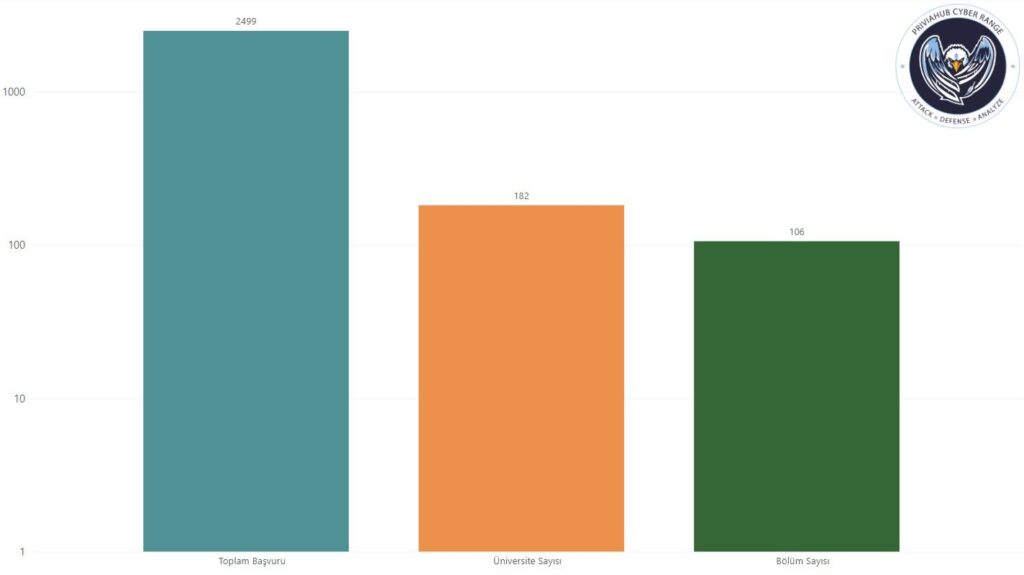
In our announcements, we had stated that internship applications were open to everyone regardless of department. At this point, as can be seen above, we have received a total of 2,499 applications from 106 different departments of 182 different universities during a one-month application process.
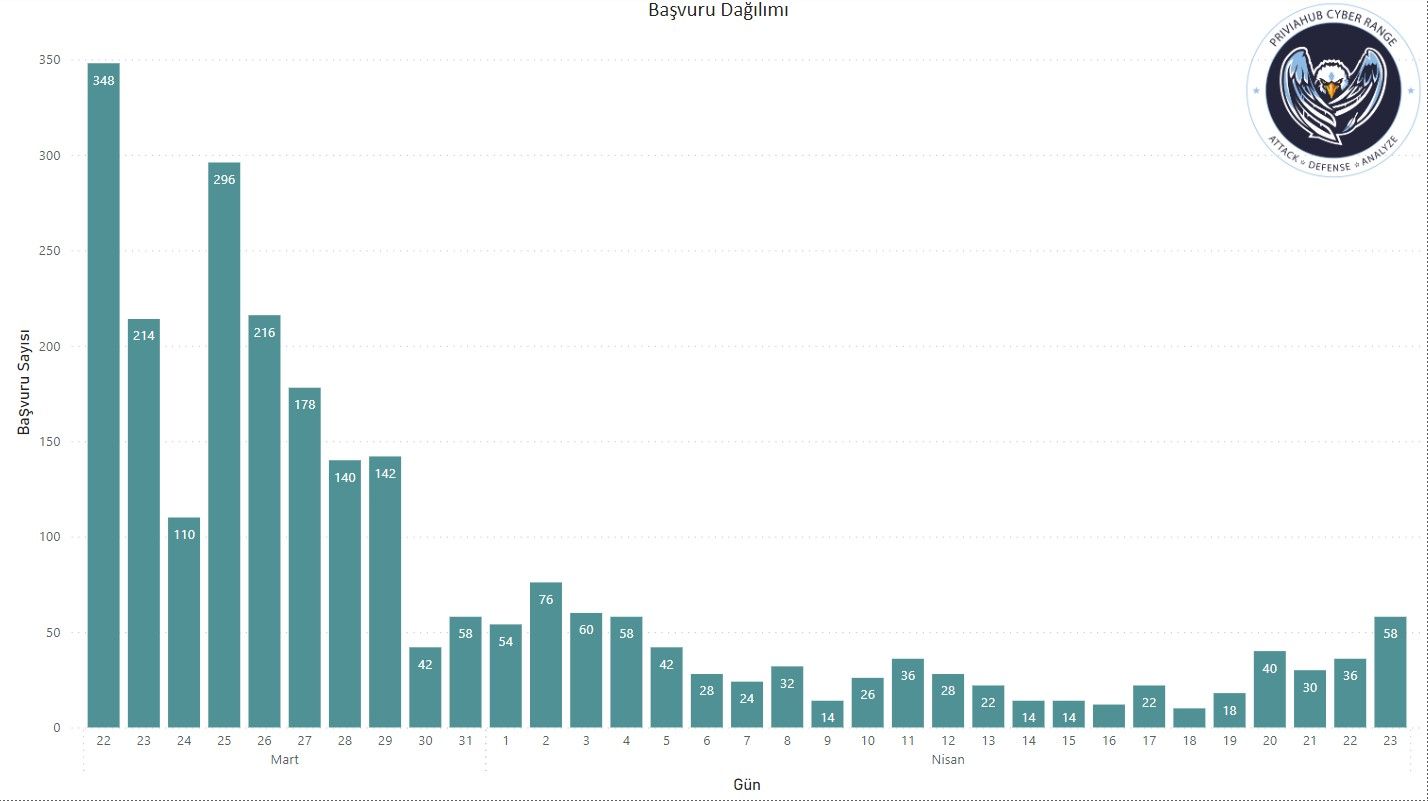
2,499 applications were made to our academy’s application form within a one-month period. When we examine the dates of these applications, the application distribution graph below emerged.
When we examine this graph, we see that there was a heavy flow of applications in the first week, and that these applications subsequently continued, albeit decreasing, with the shares made. It has been observed that our valued university lecturers made a great contribution to these shares. From WhatsApp groups to Telegram groups and on the communication channels used within universities, application shares continued to be made until the last moment. In the final days, it has emerged from the feedback received that interest was renewed and students who became aware at the last moment also embraced the programme with interest.
At this point, we extend our thanks to our valued lecturers who enabled our students to become aware of our programme by sharing it on social networks and other channels, and to our university students who supported us with their shares.
In the applications made to our “Cyber War Academy” internship programme, students were asked about the year they are studying. When we examine this distribution, we see that the most applications were made by 3rd-year students.
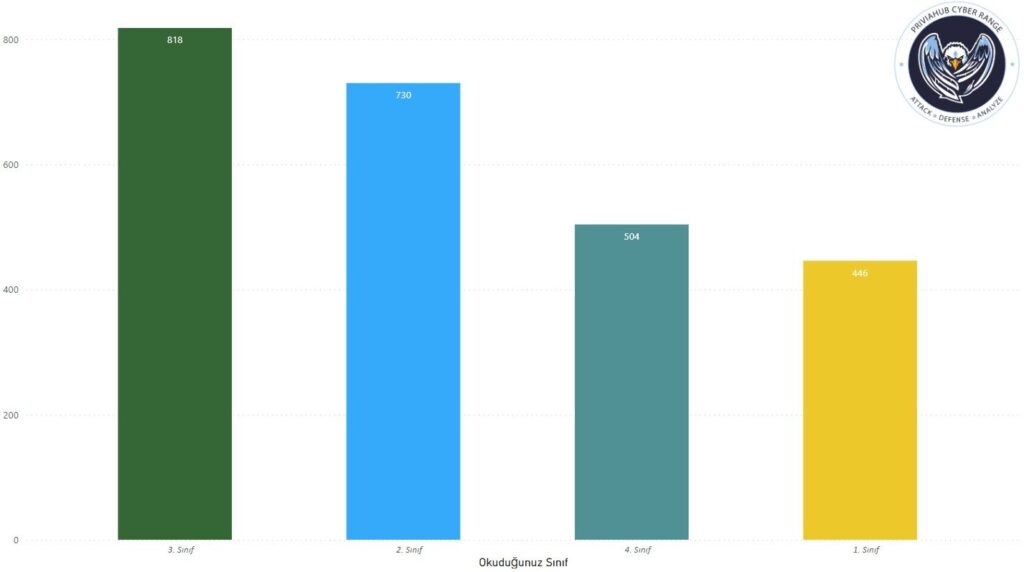
We see that a large portion of the students who applied are third-year students. According to the distribution above, applications were received from first, second, third and fourth years as follows.
When we examine the distribution by year, it shows that your programme has aroused great interest among students and that students’ interest in the field of cyber security begins in the middle periods.
Accordingly, the fact that third-year students are the group that applies the most shows that students have a high need for such a programme to put the knowledge they have gained in more advanced courses into practice and gain experience in real-world scenarios. We can also say that students’ desire to gain experience in the professional field and direct their careers increases towards the middle of their university education, and that they seek support in this regard.
By offering students such an opportunity in the field of cyber security at an early stage, you help them develop their skills and take more confident steps on the path to becoming a cyber security expert, which will make an important contribution to the training of future cyber security professionals.
The increase of such initiatives in the field of cyber security will help raise our country’s cyber security level and create qualified human resources to combat cyber threats. We wish that the successes of the “Cyber War Academy” continue and that the valuable experiences you offer to students increase even further in the future.
The application distributions of the students who applied according to the universities they study at are shown in the graph below. When we examine the universities of the students who applied, we see that the interest in the “Cyber War Academy” is more concentrated at Fırat University. At this point, we would like to point out that among the applications from Elazığ Fırat University, the programme attracted more interest from Forensic Informatics Engineering students. The increase and establishment of such and similar departments in our universities will of course increase interest in the cyber security sector.
We see that Computer Engineering students have great potential in the field of cyber security and make valuable contributions to the sector. However, we extend our thanks to the educational and teaching staff of Fırat University, who train Forensic Informatics Experts, for the contribution they make to our sector.

Their education in this field, having basic knowledge and skills in cyber security, will contribute to their development. We also extend our thanks to the students, instructors and valued lecturers of Marmara University, Anadolu University, Karabük University, Sivas Cumhuriyet University, Gazi University, Sakarya University and all our universities whose names we could not list but from which we received applications, for the contribution they make to our sector.
The students who applied were asked which department they study at and asked for their department information. In light of this information, we see it as very valuable in terms of understanding the interest in the “Cyber War Academy” and which fields the participants come from.
It is pleasing to see that the vast majority of the students who applied are from the Computer Engineering field. It is known that Computer Engineering students have great potential in the field of cyber security and can make valuable contributions to the sector. Their education in this field, having basic knowledge and skills in cyber security, will contribute to their development. In addition, a significant number of applications from the Software and Management Information Systems departments show that students educated in these fields are also interested in cyber security and want to specialise in it.
On the other hand, we believe that students from different departments such as History, Finance and Biology showing interest in the field of cyber security is very important in terms of the diversity of different perspectives and skill sets in this area. Cyber security is an attractive field with its social, legal and managerial aspects as much as its technical side. For this reason, the coming together of students from different departments will increase the potential to provide more comprehensive and effective solutions.
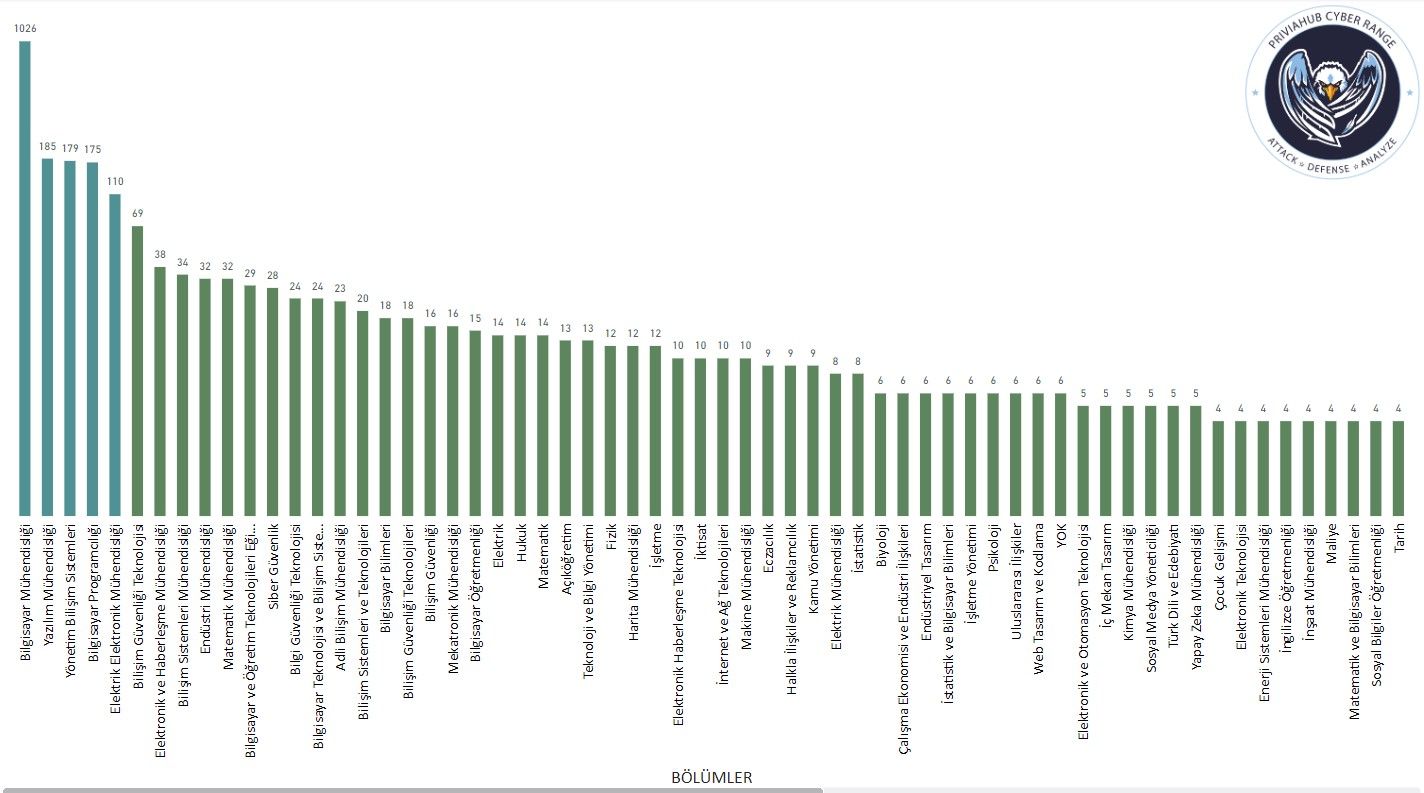
We would like to point out that such analyses based on application statistics will provide guidance in the planning and development of future programmes of the “Cyber War Academy”. In order to offer a valuable experience to all participating students and to contribute to the training of qualified experts in cyber security, we will continue to develop our programme by taking these statistics into account.
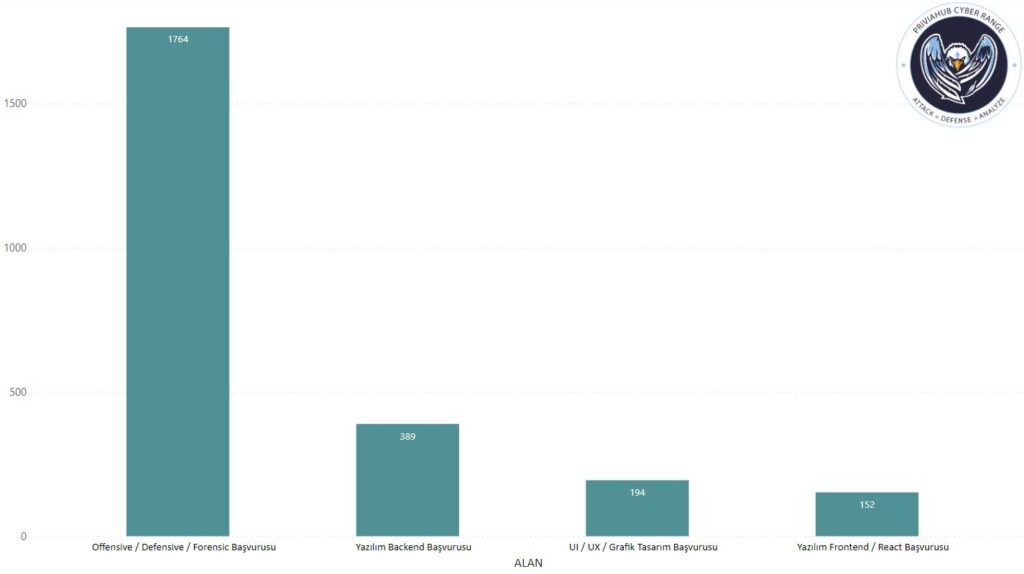
When we examine the statistics;
Six different areas have been determined for Cyber War Academy applications. Among these four areas determined for Design, Software and Cyber Security topics, the most applications were made to the Cyber Security Intern (Offensive / Defensive / Forensic) area. This was followed by Software Backend interns, then Design (UI/UX/Graphic) interns and Software Frontend intern applications.
Announcements were made through many channels for the Cyber War Academy Internship Programme, and at the same time contact was made with the clubs of many universities. At this point, the answers given to the question “Where Did You Hear About the Cyber War Academy?” have been turned into the word clouds below using the Microsoft Power BI application.
On the word cloud we have created with these words, large fonts represent the most discussed and small fonts represent the least used words. When we examine the words, we see that the LinkedIn platform is at the forefront for Cyber War Academy announcements. While the announcements we made using social networks and digital communication channels were shared frequently, we also see that the shares and recommendations of our valued university lecturers and cyber clubs were influential.
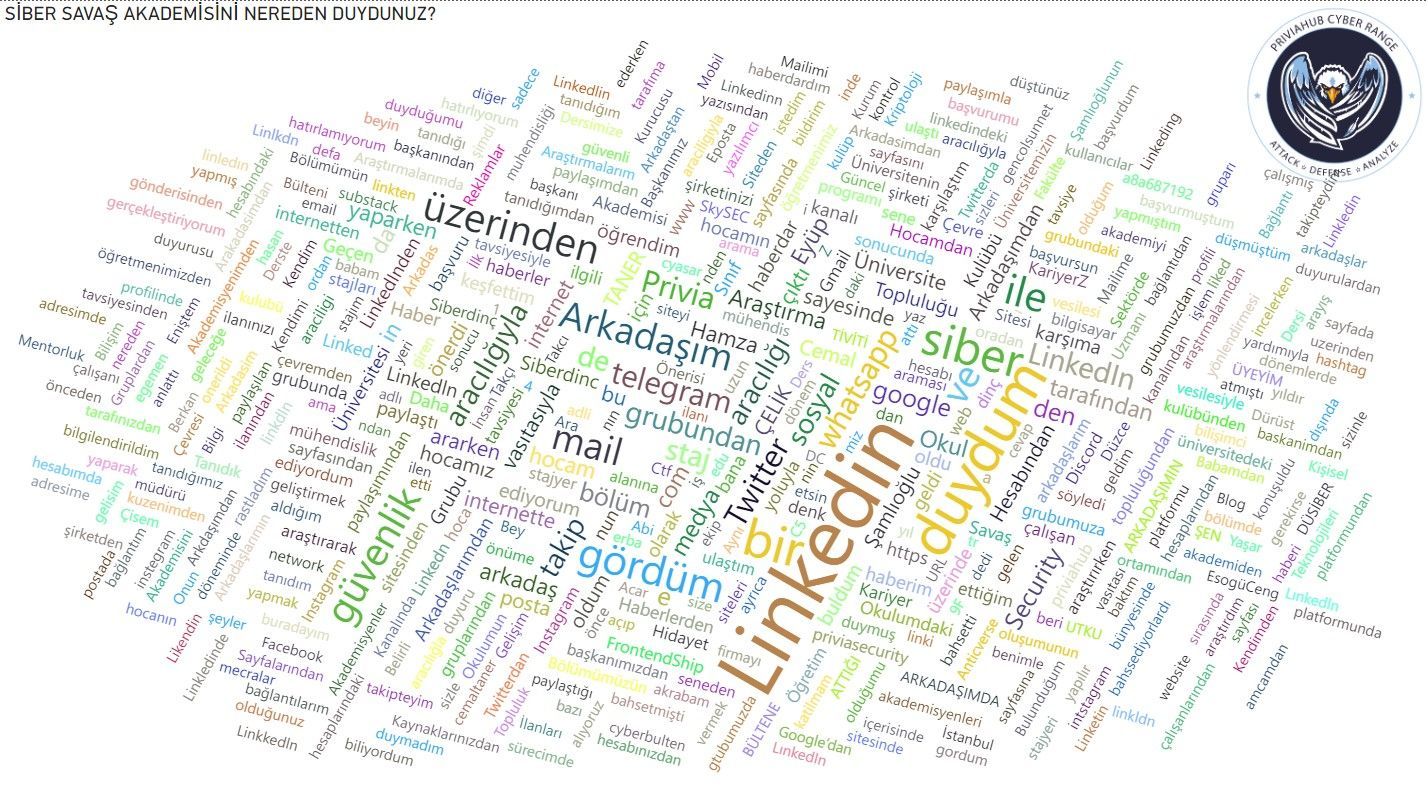
In addition to LinkedIn being the most striking platform on the graph, we can say that we have also noticed those who became aware via email, cyber clubs, our valued university lecturers, and through environmental factors such as friends and other channels. Our word cloud reveals that there are many such and similar information sharing areas. At this point, we would also like to remind you that we take into account the feedback coming from digital communication channels.
In the application form, our students were asked whether they had done an internship before. Those who responded to this question are shown below. The fact that students were asked in the application form whether they had done an internship before/not, and the analysis of the answers given to this question, provides very valuable information. The fact that those who have never done an internship before are in the majority shows that students have found the opportunity to experience their first internship by participating in the “Cyber War Academy” Internship Programme. Your internship programme provides an important opportunity for students who have not done an internship to take their first steps in the field of cyber security. Such programmes aim to provide students with a unique environment to put their theoretical knowledge into practice and gain experience working on real projects.
This information shows that interest in your internship programme is high and that those applying to the programme are young and experienced interns. The fact that students who have not done an internship before apply to your programme reveals their desire to contribute to their careers in the field of cyber security and gain new skills.
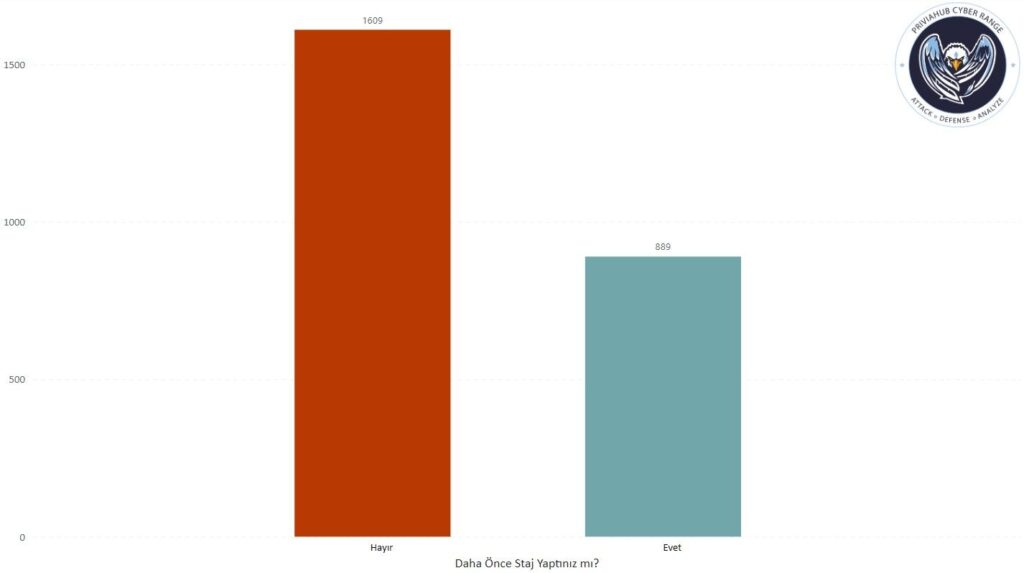
At this point, we see that there are 1,609 people who have never done an internship before. The great interest shown in the programme by students who have never done an internship before shows that there is a high need to train new talents and potential experts in the field of cyber security. On the other hand, we see that 889 of our students have shown interest in your programme by having internship experience in different areas in some form.
Our students who applied were asked for their Github addresses. When we examine those who responded to this question, it turns out that the majority of them have an account on Github. GitHub is considered an important tool in software. Seeing that the majority of students who responded to the Github address question have a GitHub account shows that the students who applied to the “Cyber War Academy” Internship Programme are interested in technology and software fields and are actively developing projects in these areas. GitHub is a platform that facilitates software development processes and is important for collaboration.
The 1,456 people who have a GitHub address can make valuable contributions as future cyber security experts with their skills in project development, code sharing and collaboration. In addition, students who share their projects on GitHub will increase the likelihood of being more active and experienced in the field of cyber security and the opportunity to stand out in their careers.
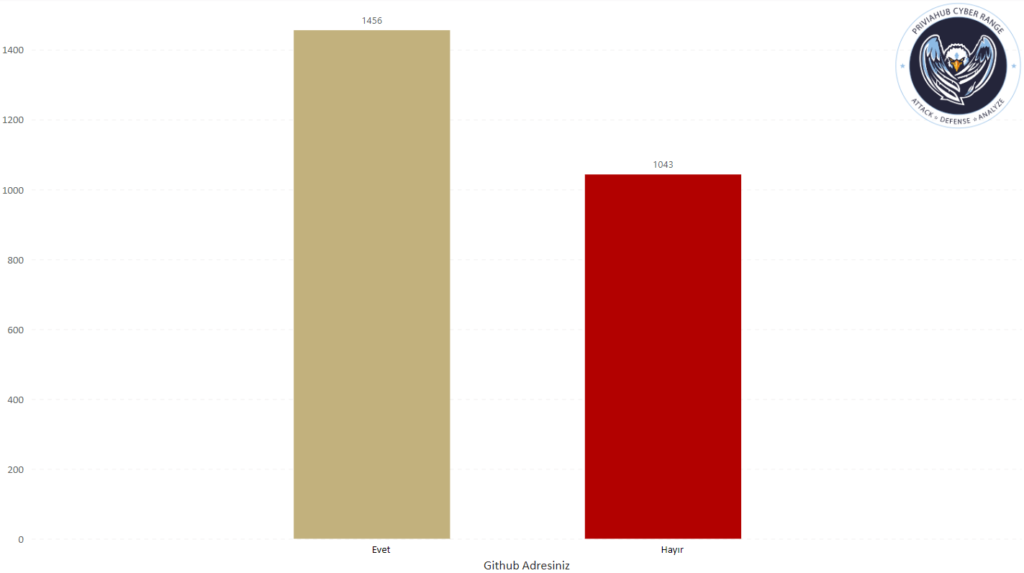
On the other hand, the fact that 1,043 people do not have a GitHub address reveals that they may not yet be familiar with technology and GitHub, or that they may be in the process of starting to use GitHub. We recommend that such students increase their interest in software and technology areas after seeing your applications and programme in the field of cyber security.
The Twitter addresses of those who applied were requested in the application form. When we examine the results, we see that Twitter users are in the minority, but that one-fifth of those who applied continue to use Twitter. The use of relevant social media platforms may vary among candidates, and this data is valuable in terms of showing how active the candidates are in the digital realm and how familiar they are with technology.
The fact that Twitter users are in the minority among applicants shows that students’ social media preferences may vary and that Twitter is just one social media platform. Some students may prefer other platforms (such as Instagram or LinkedIn) more than Twitter. It is also evident that Instagram has been used as a popular platform among young people in recent years.
At this point, the fact that 544 people have an active Twitter account shows that these people are open to sharing information on social media and potentially follow news and information flow in the field of cyber security. We can say that such students tend to follow current developments and trends in the field of cyber security and contribute to their careers.
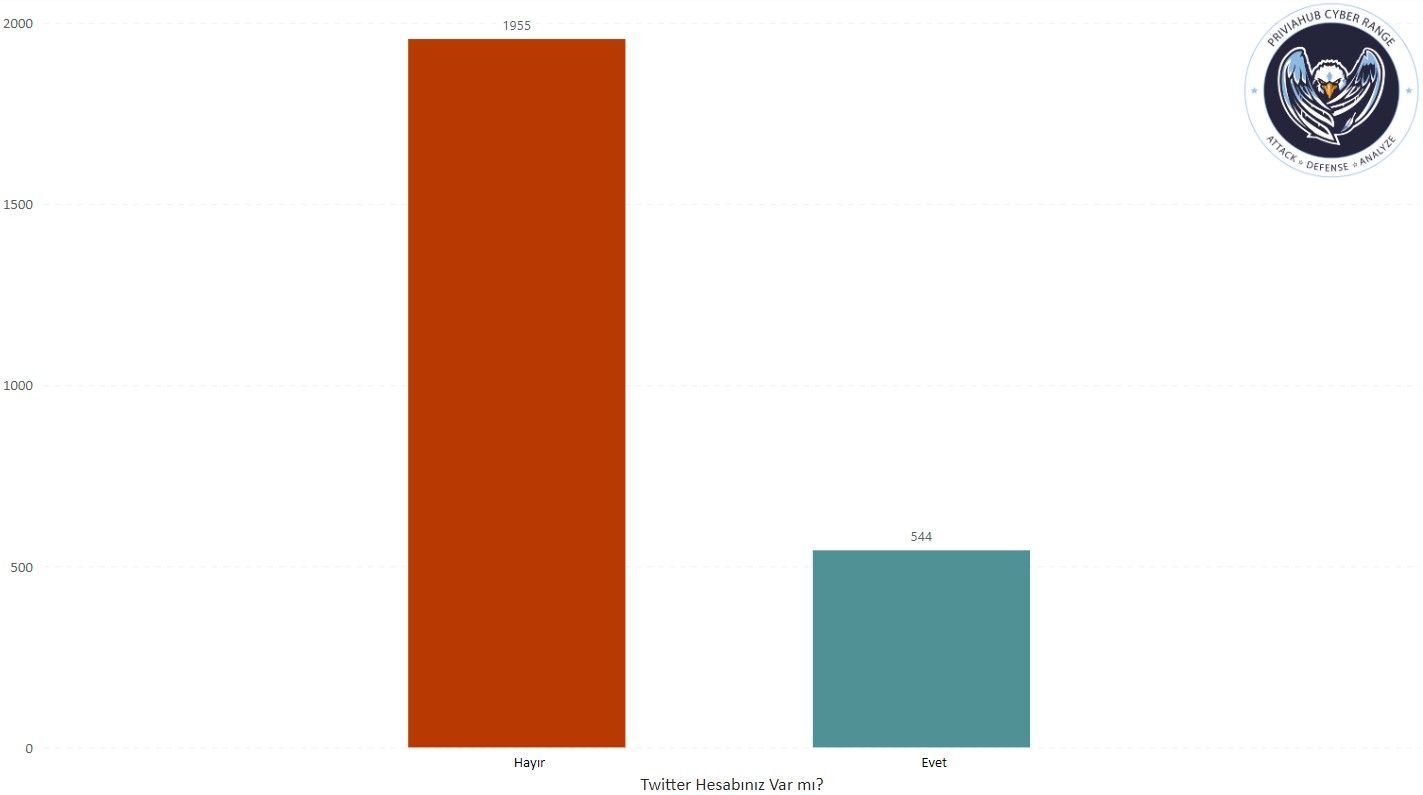
On the other hand, the fact that 1,955 people stated that they do not use Twitter may indicate that students who do not actively use Twitter focus on more social media platforms or that Twitter is not as important to them as other social media platforms. What is important is that any social media platform provides an opportunity for students to have knowledge and awareness of cyber security and to follow developments related to the sector. Such data provides guidance in optimising the promotion and communication strategies of your programme in the future.
The request for LinkedIn addresses in the application form is an important step to measure students’ professional identities and their potential to contribute to the business network. LinkedIn is considered an important platform, especially in the business world and in professional networking. For this reason, the fact that the vast majority of students who applied have a LinkedIn account reflects their interest and participation in the business world and the professional area.
The higher usage of LinkedIn compared to Twitter provides information about students’ tendencies to plan their careers and establish relationships with the business world. The fact that the majority of applicants have a LinkedIn account has shown us that these students are those who plan to pursue a career in cyber security in the future, want to be active in the business world, or want to use this platform to connect with employers and job opportunities.
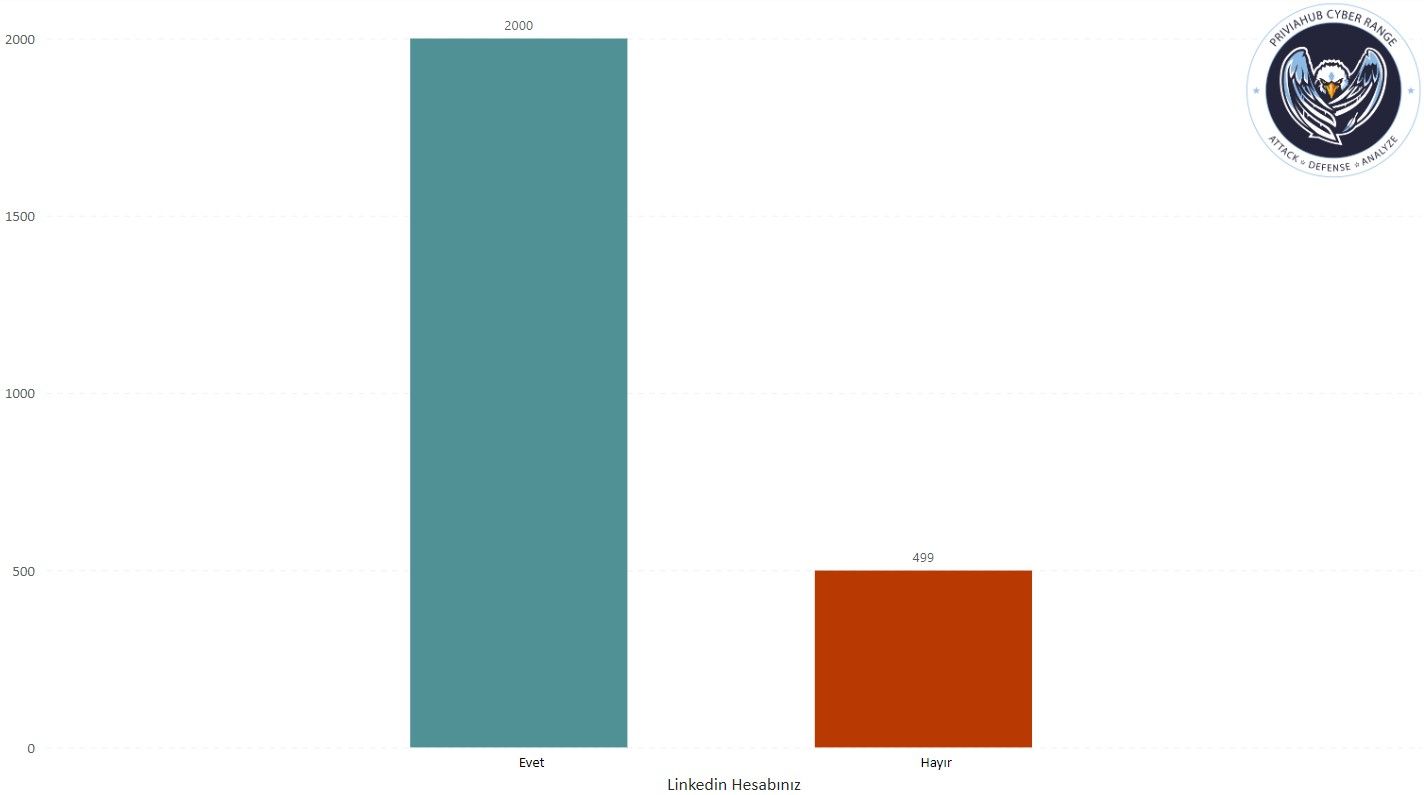
On the other hand, the fact that 499 people stated that they do not use a LinkedIn account may indicate that these students have not yet shown interest in this professional social network or that this platform is not a priority for them. Each student may have different social media preferences and goals, so such data may reflect a wide variety of profiles. The request for LinkedIn addresses is important in understanding how active the students who applied to your internship programme are in the professional field and what kind of steps they are taking for their future cyber security careers. Such data can guide the strategies of your programme to develop relations with professional networks and the business world.
Our results for the Instagram address, which has become one of the must-haves for young people in today’s technological world, are as follows. The almost half-and-half result obtained for Instagram usage shows that students’ social media preferences vary and that Instagram, like other social media platforms, is preferred equally among young people.
The fact that 913 applicants have an Instagram account shows that these students value following and sharing visual content and are actively present in the social media world. Such students can also follow various content related to cyber security and gain awareness of cyber security. However, we would like to point out that this network is not as useful for our sector as LinkedIn.
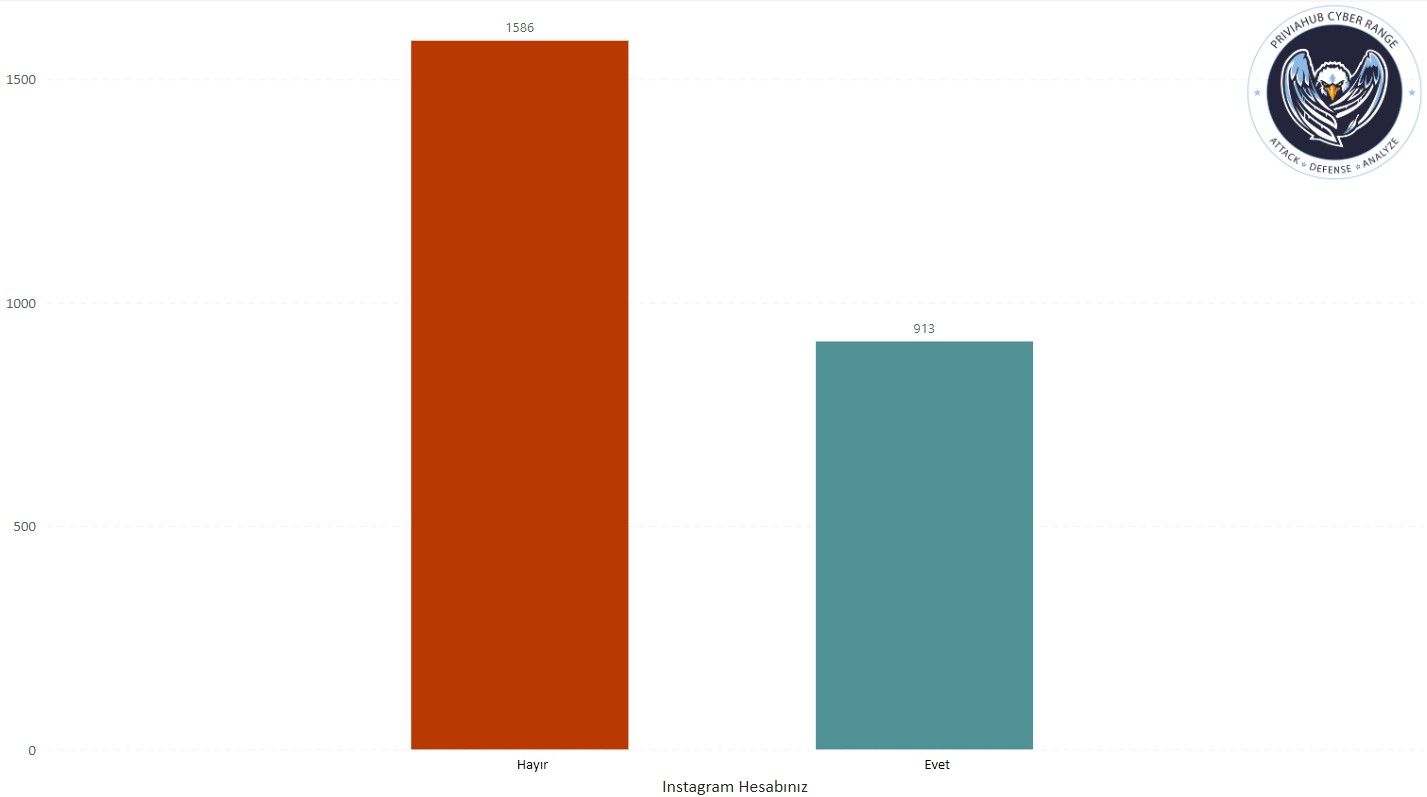
On the other hand, the fact that 1,586 people stated that they do not have an Instagram account may reflect students who are not interested in social media or who use other platforms more. It is important to remember that Instagram is not a preference for everyone and that students may have different social media preferences. However, according to our statistics, after LinkedIn, Instagram has been shown to be actively used.
Such social media data provides us with valuable information to understand how young people consume information and content in the field of cyber security and to establish effective communication with them.
The request for blog addresses in the application form is an important step to evaluate students’ activities in technology and software fields and their written content production skills. Blogs are an important platform where people can share their ideas and experiences, and where students can demonstrate their expertise and competencies in their own fields.
The fact that 333 people among the applicants have a blog address shows that these students are interested in producing written content and may have expertise in certain topics. Blogs can be a great tool for students to share their technical knowledge and experiences related to cyber security and have the potential to offer useful content to other students and professionals.
On the other hand, the fact that 2,166 people do not have a blog address reflects students who are not interested in blog writing or who have not yet found an opportunity to share such content, as well as showing that there are students who are hesitant to produce content or who are unaware of this experience. It should not be forgotten that each student has different areas of interest and skills, so those who do not have a blog can also contribute to the programme in different ways.
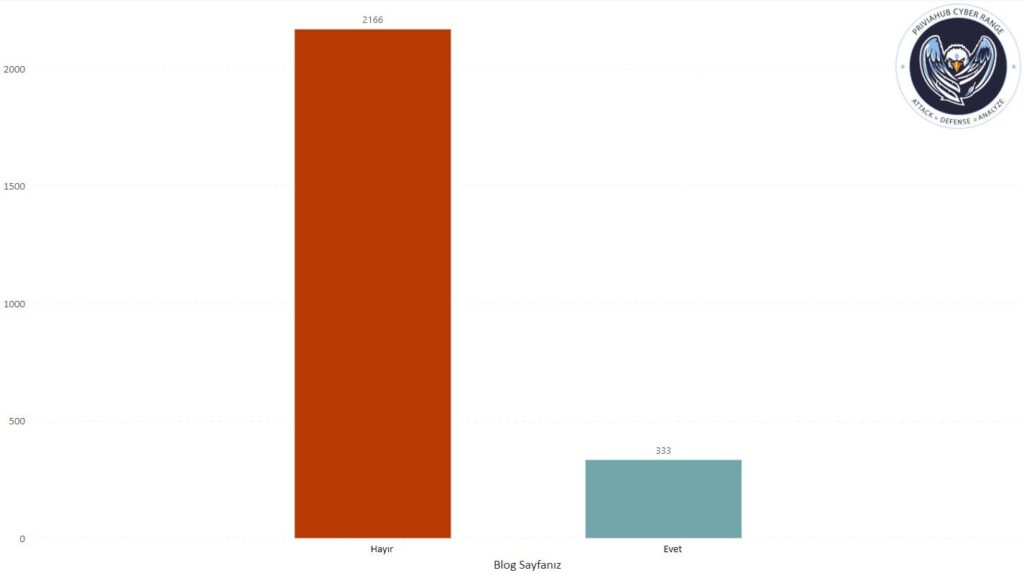
The request for blog addresses is important to evaluate students’ expertise and content production abilities in their own fields. In addition, blogs offer students an opportunity to share their knowledge and experiences in the field of cyber security, and such content will be a valuable resource for future cyber security experts.
When we examine the reasons for choosing the Cyber War Academy, we see that students are looking for a programme that will add value to their careers and want to take advantage of an opportunity to develop themselves together with the Privia Security family. It is also notable that students stated that they aim to develop themselves through the programme, specialise in cyber security and achieve their career goals. The prominence of words such as “cyber”, “security”, “develop”, “academy”, “internship” shows that the target audience and content of the programme have been chosen correctly.
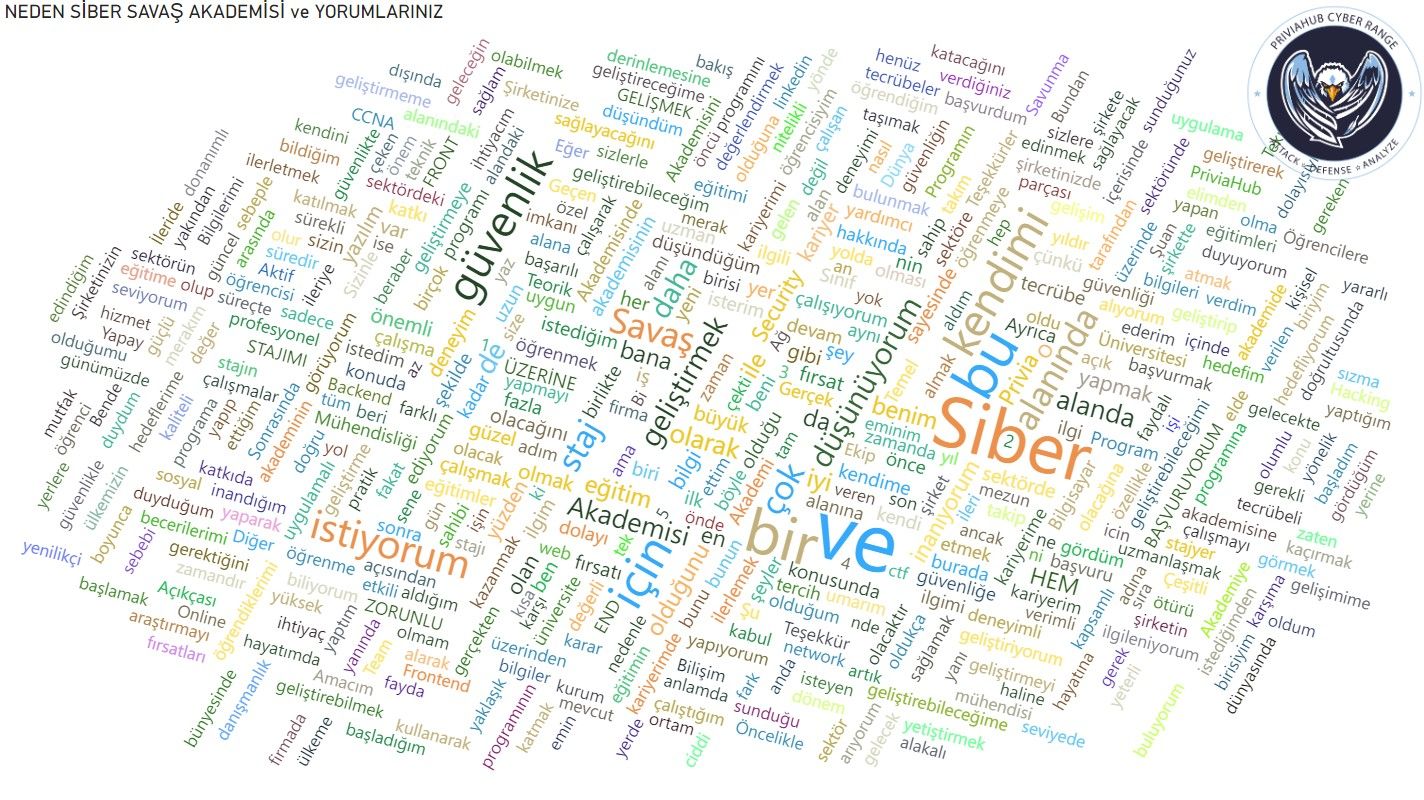
The word cloud created with these words reflects that students are excited about developing themselves in the field of cyber security and increasing their knowledge and skills. Such internship programmes are very important for students to recognise their own potential and to take steps towards a successful career as future cyber security experts.
We thank all the students who applied to the Privia Security Cyber War Academy Internship Programme. We hope that the programme will help train qualified cyber security experts who will contribute to the secure digital world of the future and help students achieve their career goals. We also feel obliged to thank everyone individually who contributed to reaching our valued students with this programme.
You May Be Interested In These