

Explore our new Cybersecurity Terms Glossary, explained by our experts.

Explore our new Cybersecurity Terms Glossary, explained by our experts.
Cybersecurity Terms Glossary
A CWPP secures running workloads—virtual machines, containers, and serverless functions—with vulnerability visibility, hardening checks, and runtime threat detection.
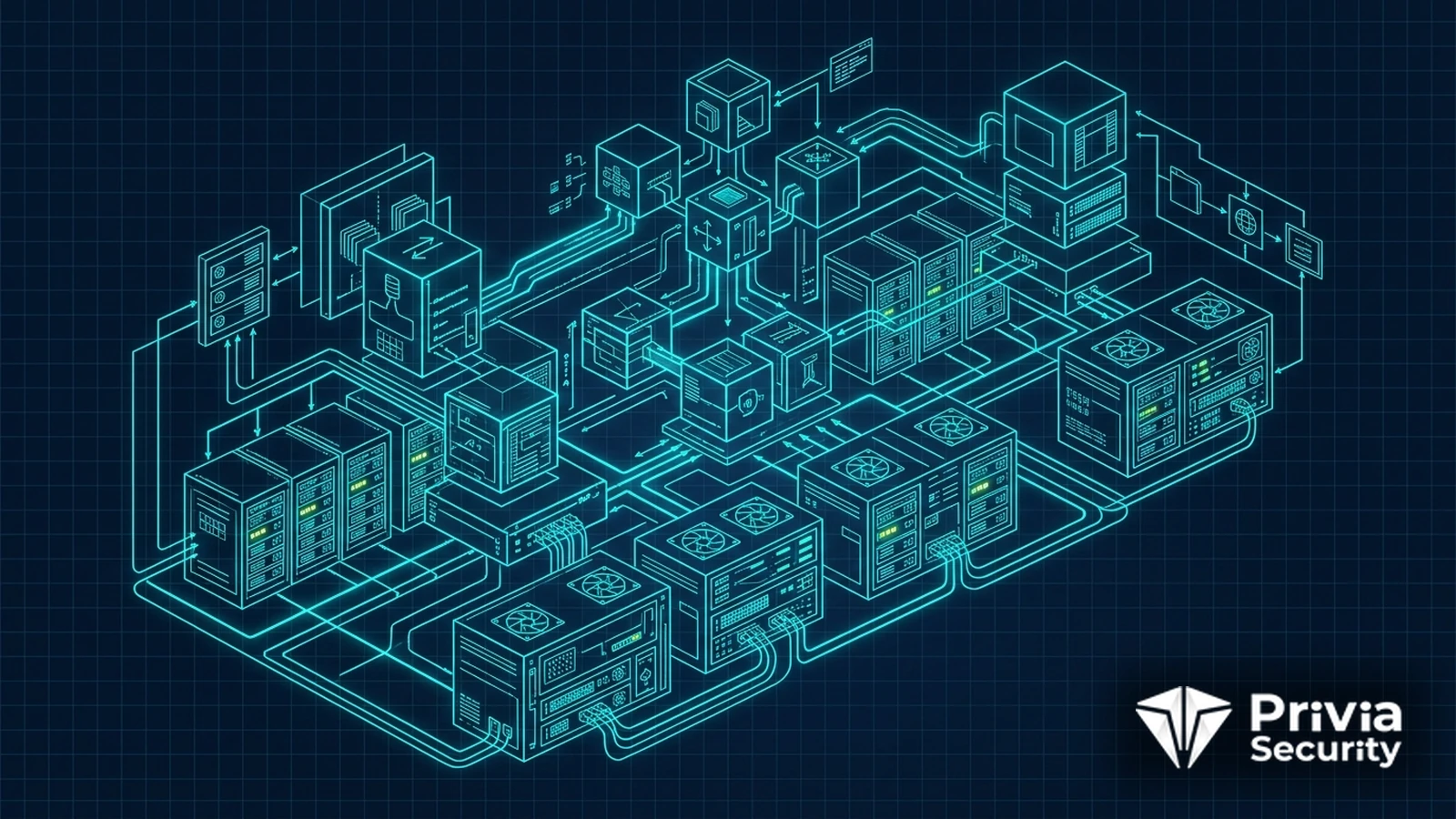
What Is a Cloud Workload Protection Platform?
A cloud workload protection platform, or CWPP, secures the things that are actually running: virtual machines, containers, Kubernetes nodes, and serverless functions. Where posture management asks whether your cloud is configured correctly, a CWPP asks what is happening inside the compute itself—which packages are vulnerable, whether the host is hardened, and whether a process has just done something it has never done before.
Traditional endpoint protection assumes a long-lived machine with a user attached. Cloud workloads break both assumptions. A container may live for ninety seconds, an autoscaling group replaces instances continuously, and a serverless function has no host you can install anything on. Signature scanning on a schedule is meaningless when the thing being scanned no longer exists.
Workload protection therefore anchors itself to the image and the behaviour rather than to the machine. It inventories what was deployed, maps known vulnerabilities to the running version, watches system calls and network activity for unexpected patterns, and ties findings back to the deployment that produced them so a fix lands in the pipeline rather than on a single host.
An agent sees system calls, process trees, and live memory, which is the only way to detect behaviour in real time and to block it. The cost is deployment effort, resource overhead, and a component that must be maintained in every base image and node pool.
Agentless scanning works by analysing disk snapshots through the provider API. Coverage is immediate and complete, including workloads nobody told you about, with no performance impact. The limitation is fundamental: a snapshot taken every few hours cannot detect something that happened in between, and it cannot stop anything.
Most mature deployments use agentless scanning for universal vulnerability and configuration coverage, and agents on the workloads that matter most—production, internet-facing, and anything handling regulated data. Deciding that split explicitly is better than discovering it after an incident.
Posture management, covered in our entry on CSPM, evaluates cloud configuration through the control plane. Entitlement management analyses identity. Workload protection covers the compute layer. Most vendors now sell all three inside a cloud-native application protection platform, which is largely a packaging decision—the underlying capabilities remain distinct and are often bought at different times.
The comparison people ask about most is with endpoint detection and response. The two overlap on servers, and several vendors use one agent for both. The difference is context: a workload platform understands that this container came from that image, built by that pipeline, running with that cloud role, which turns an alert into a fix at source.
Start with coverage, because unknown workloads are the ones that hurt. Run agentless scanning across every account first and reconcile the inventory against what you believed you had. Then tune runtime detection on a small set of production services before expanding, since default rule sets generate noise in environments that use debug containers or run administrative jobs in production. Route findings to the owning team with the deployment identifier attached, and track mean time to remediate rather than the total count of findings, which only ever goes up.
Open-source Falco is a credible starting point for runtime detection if budget is the constraint, and it pairs well with the image scanning described in container image scanning.
At Privia Security, we validate workload defences against real attack behaviour through our cloud security services.
You may already have most of it, since several endpoint vendors extended their agents to cover cloud workloads. What endpoint tooling usually lacks is cloud context: which image a container came from, which pipeline built it, which cloud role it holds, and how to map a finding back to the build that should fix it. Check whether your existing agent provides that before buying a second one.
Partially. There is no host to install an agent on, so coverage comes from scanning the deployment package and its dependencies, reviewing the function’s permissions, and analysing invocation logs. Some vendors offer in-process layers that add limited runtime visibility. The highest-value controls for serverless remain dependency management and tight function permissions rather than runtime detection.
For vulnerability and configuration coverage, often yes, and it has the advantage of finding workloads nobody registered. For detection it is not sufficient, because a snapshot taken periodically cannot see a process that ran between snapshots and cannot block anything. A common split is agentless everywhere for visibility, with agents on production and internet-facing workloads for runtime detection.
Start with a handful of high-signal behaviours: a shell spawning inside a container that should not have one, writes to directories that should be immutable, outbound connections to addresses outside your expected set, attempts to read cloud metadata from an unexpected process, and privilege-changing system calls. These catch most post-compromise activity without the noise of a full default rule set.
You May Be Interested In These



We use a few cookies that are needed to make this website work, and they are always on. We would also like to set analytics cookies, to see which pages are useful; functional cookies, so that our live chat works; and advertising cookies, to measure our campaigns. We will not set any of those until you say yes, and you can change your mind at any time from the Cookie Settings link in the footer.
Choose the cookies you are happy for us to use. Strictly necessary cookies are always on; everything else is off until you turn it on.
These cookies keep the website working: they hold your security checks, your form submissions and the choice you make here. The site cannot run without them, so they are always on.
These let our live chat open and remember your conversation, and let the newsletter sign-up work. Switch them off and the chat window will not appear.
These tell us which pages are read and how people find us, so that we can improve the site. The reports are about groups of visitors, never about you personally.
These let us measure our advertising and show you our adverts on other websites, such as LinkedIn, Google and Meta. Switch them off and you will still see adverts, but they will be less relevant.


