

Explore our new Cybersecurity Terms Glossary, explained by our experts.

Explore our new Cybersecurity Terms Glossary, explained by our experts.
Cybersecurity Terms Glossary
A secure element is a tamper-resistant chip that generates and stores cryptographic keys and performs operations with them, so that secrets never exist in readable memory anywhere else on the board.
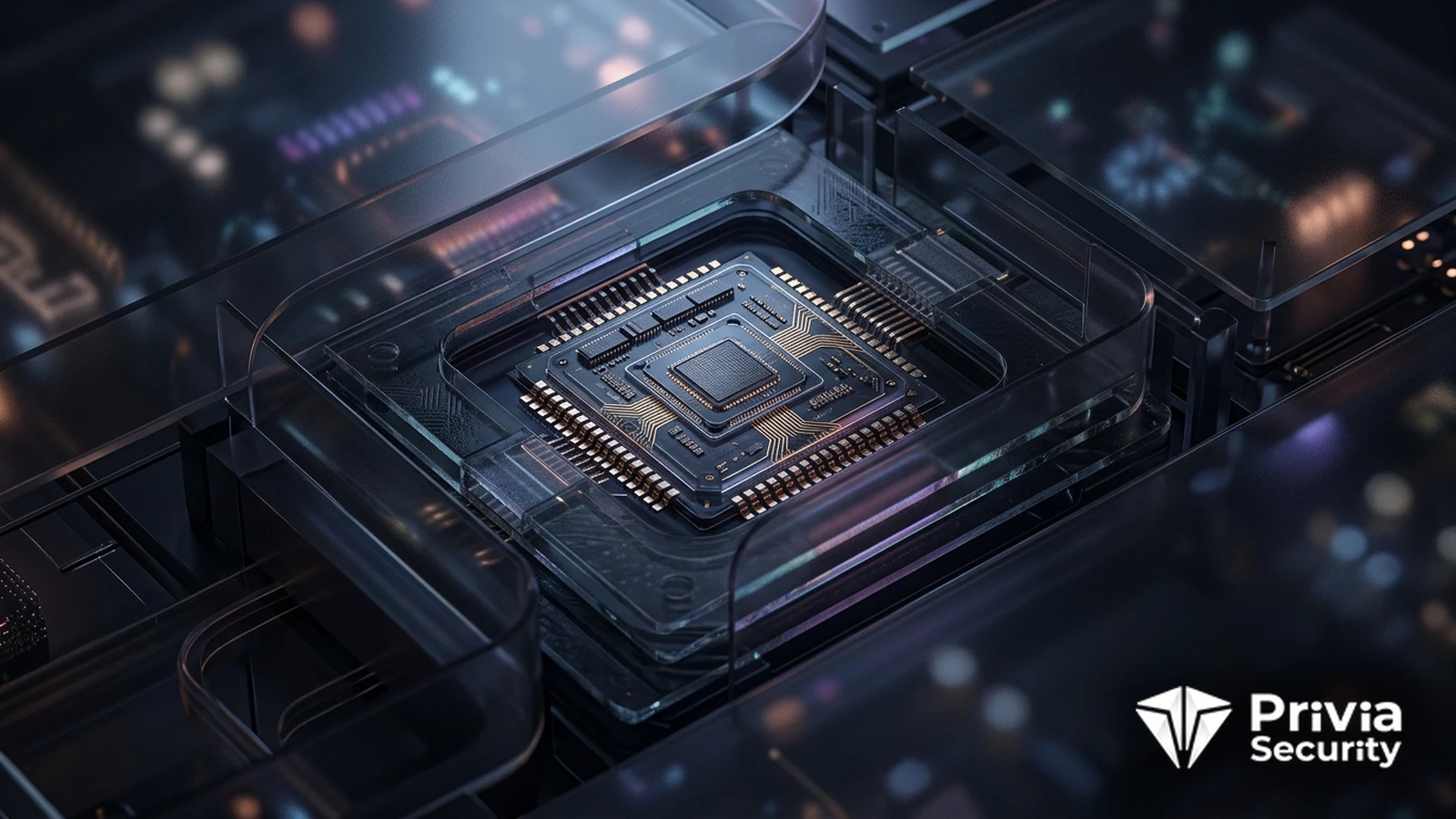
What Is a Secure Element?
A secure element is a dedicated chip whose only job is to protect secrets. It generates key pairs internally, stores them in memory that no external interface can read, and performs signing, key agreement, or encryption on request. The host processor asks for an operation and receives a result; it never sees the private key, and neither does anyone who desolders the flash or probes the circuit board.
That design decision addresses the central problem of embedded security. A key written to external flash is a key that a SOIC-8 clip reads in thirty seconds, and if the manufacturer used the same key across a product line, one purchased unit compromises every deployed one. Moving the key into silicon that resists physical attack changes the economics completely.
Secure elements are built to withstand attacks that ordinary microcontrollers are not designed to consider:
These claims are tested independently. Secure elements are typically certified under Common Criteria at EAL5+ or EAL6+, which involves a laboratory actively attacking the part, and payment-grade devices also carry EMVCo approval. A chip that merely describes itself as secure, without a certificate naming the protection profile, is making a marketing claim rather than an evaluated one.
These four are related and routinely confused.
| Technology | Form | Typical use |
|---|---|---|
| Secure element | Separate certified chip, or embedded in the SoC package | Device identity, payment, key storage in IoT and phones |
| Trusted execution environment | Isolated mode of the main processor, such as ARM TrustZone | Protected code execution with more memory and speed, less physical resistance |
| TPM | Standardised chip or firmware implementation | Platform integrity measurement and key storage on computers |
| HSM | Server appliance or card | High-volume key operations for certificate authorities and payment systems |
A TEE offers isolation but shares silicon with the main processor, so it inherits exposure to the processor’s own flaws. A secure element is a separate die with its own defences and is slower and more constrained as a result. Many modern designs use both: TrustZone for the application logic, a secure element for the keys that must survive a compromised operating system.
SIM and eSIM modules are secure elements, as are bank cards, electronic passports, and the embedded secure elements phones use for payment and attestation. In embedded products the common parts are the Microchip ATECC608, NXP’s SE050 family, and the Infineon OPTIGA Trust range, generally chosen for one of three jobs: holding the device’s unique identity for provisioning and mutual TLS, verifying signatures during firmware updates, and protecting an anti-rollback counter that firmware alone could reset.
Decide early, because adding a chip after the schematic is finished is a board respin. Ask whether the part is certified and against which protection profile, whether keys can be generated on-chip rather than injected, and how provisioning will work at your contract manufacturer — a pre-provisioned part with a manufacturer certificate avoids a key injection facility entirely.
Be clear about the limits. A secure element protects keys; it does not stop an attacker who controls the host processor from asking it to sign malicious data. Pair it with secure boot so that only authorised firmware is in a position to make requests, and enforce usage policies in the element where it supports them.
Our Hardware Penetration Test Services examine how keys are actually used on a board, which is frequently where a well-chosen secure element turns out to be bypassable.
No. The test is whether the device holds a secret whose exposure would matter beyond that unit, such as a fleet-wide key, a signing key, or credentials for a cloud account. Where the only secret is a per-device token that can be revoked cheaply, the MCU’s internal protected storage with debug disabled may be proportionate. Physical accessibility of the product raises the bar.
Given a well-equipped laboratory and enough time, parts have been defeated, usually through advanced fault injection or invasive probing. Certification at EAL5+ or EAL6+ means an accredited laboratory attempted exactly this and documented the resistance achieved. For realistic threat models the practical answer is that attack cost exceeds the value of a single device’s keys, which is the point.
TrustZone partitions the main application processor into secure and non-secure worlds, giving isolated execution with full processor speed and memory. A secure element is physically separate silicon with its own tamper defences, side-channel countermeasures, and certification. TrustZone offers more capability; a secure element offers more resistance to someone holding the board. Many designs use both for different jobs.
Either the part generates its own key pair and exports only a certificate signing request, or keys are injected in a controlled facility. On-device generation is preferable because the private key never exists anywhere else, which keeps the contract manufacturer out of your trust boundary. Several vendors also sell pre-provisioned parts carrying a certificate issued at the silicon fab.
You May Be Interested In These



We use a few cookies that are needed to make this website work, and they are always on. We would also like to set analytics cookies, to see which pages are useful; functional cookies, so that our live chat works; and advertising cookies, to measure our campaigns. We will not set any of those until you say yes, and you can change your mind at any time from the Cookie Settings link in the footer.
Choose the cookies you are happy for us to use. Strictly necessary cookies are always on; everything else is off until you turn it on.
These cookies keep the website working: they hold your security checks, your form submissions and the choice you make here. The site cannot run without them, so they are always on.
These let our live chat open and remember your conversation, and let the newsletter sign-up work. Switch them off and the chat window will not appear.
These tell us which pages are read and how people find us, so that we can improve the site. The reports are about groups of visitors, never about you personally.
These let us measure our advertising and show you our adverts on other websites, such as LinkedIn, Google and Meta. Switch them off and you will still see adverts, but they will be less relevant.


