

Explore our new Cybersecurity Terms Glossary, explained by our experts.

Explore our new Cybersecurity Terms Glossary, explained by our experts.
Cybersecurity Terms Glossary
NotPetya destroyed almost the entire IT estate of A.P. Moller-Maersk in June 2017. The company rebuilt from a single domain controller that had survived a power cut in Ghana.
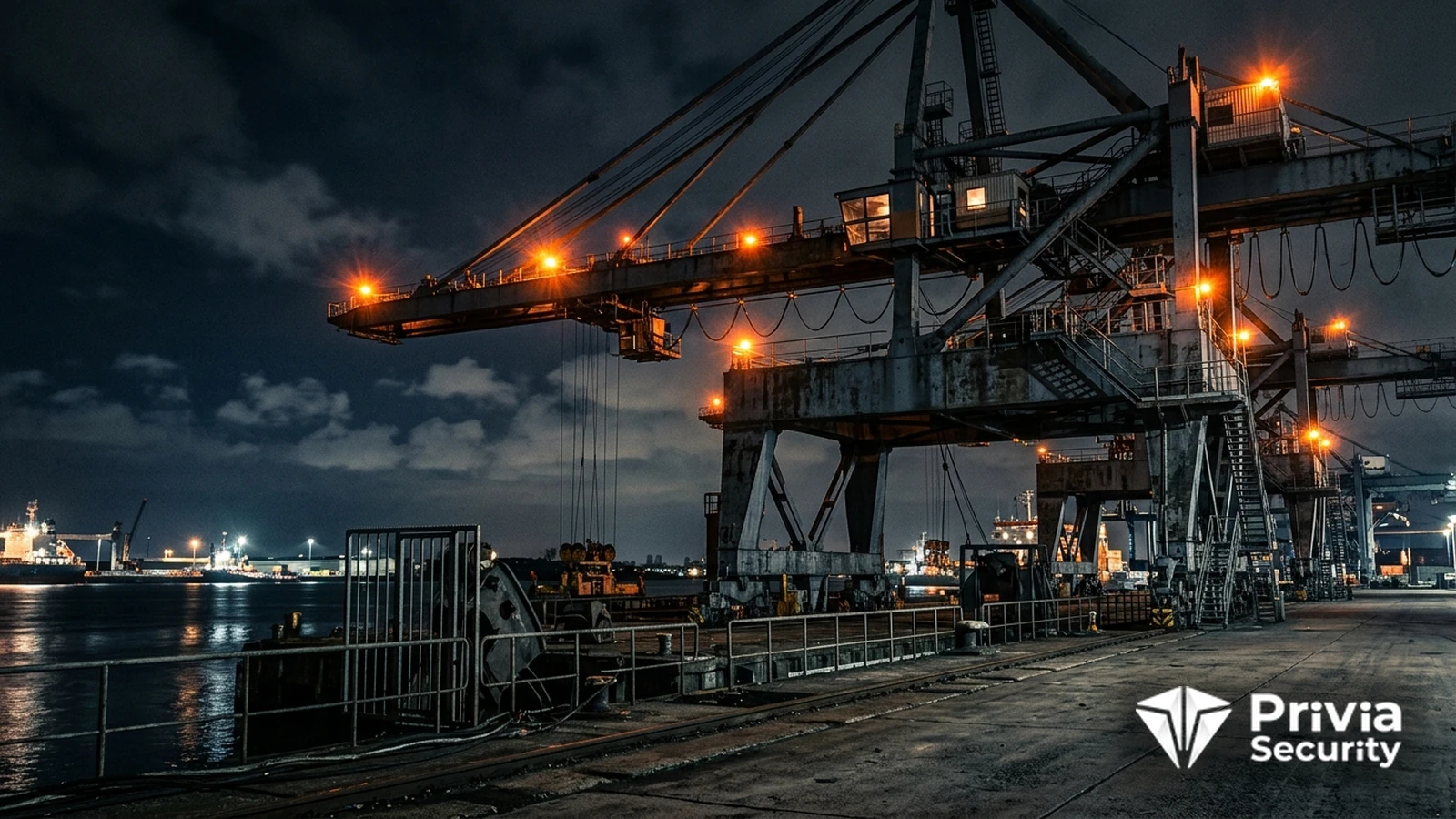
What Happened in the Maersk NotPetya Incident?
On 27 June 2017 the shipping company A.P. Moller-Maersk lost its global IT estate in roughly seven minutes. Staff watched screens go black across offices from Copenhagen to Mumbai. Terminals that handle one in five of the world’s shipping containers stopped functioning. The eventual cost was estimated at between $250 million and $300 million, and the company had done nothing to invite the attack beyond having an office in Ukraine.
The malware arrived through a compromised update to M.E.Doc, Ukrainian tax accounting software that any company trading in the country effectively has to run. From that single supplier update it spread laterally using the EternalBlue SMB exploit and credential theft through Mimikatz-style techniques, which meant it reached machines that were fully patched by harvesting credentials from machines that were not.
It presented a ransom note, but it was not ransomware. The encryption was not reversible, the payment channel was a single email address that was disabled within hours, and the installation identifier shown to victims was random data rather than a decryption key. NotPetya was a wiper wearing ransomware’s clothing. In February 2018 the NCSC and the UK government formally attributed it to the Russian military, a judgement shared by several allied governments.
Maersk lost approximately 49,000 laptops, 4,000 servers, and 2,500 applications. Active Directory, which authenticates everything in a Windows estate, was destroyed across every site — domain controllers replicate with one another, and the malware followed those connections.
Recovery turned on an accident. A domain controller in Ghana had been offline during the attack because of a local power cut, and its disk held an intact copy of the directory. The drive was physically carried to the recovery operation in the United Kingdom, because the network link was too slow to be useful. From that single surviving copy, the company rebuilt a global identity infrastructure in about ten days, supported by staff who improvised with personal devices, messaging apps, and paper while systems were unavailable.
Not “could this happen to us”, which invites reassurance, but “how would we authenticate anyone tomorrow morning if every domain controller were gone tonight”. The answer reveals whether directory recovery is actually tested, whether backups are genuinely isolated, and whether anyone has written down the manual process for the handful of activities that have to continue regardless. That is the territory covered by recovery objectives and by a tested business impact analysis, and at Privia Security we rehearse exactly that scenario in our cyber exercise services.
No, although it was designed to look like it. The encryption was not reversible, the single payment email address was disabled within hours, and the identifier displayed to victims was random data rather than usable key material. Analysts classify it as a wiper, and in February 2018 the UK government and allied states formally attributed it to the Russian military.
From one surviving domain controller in Ghana that had been offline during the attack because of a local power cut. Its disk held an intact copy of the directory, which was physically transported to the recovery operation because network transfer was impractical. The global rebuild took roughly ten days from that single copy.
Through a compromised update to Ukrainian tax accounting software used by its local operation. Once inside, it spread laterally using the EternalBlue SMB exploit and stolen credentials, which allowed it to reach fully patched machines by harvesting credentials from unpatched ones. No targeting of Maersk specifically was required.
Keep offline copies of directory services and test restoring them in isolation; make backup infrastructure unreachable from production credentials; segment the network so a single compromise cannot reach every site; document and rehearse manual processes for critical operations; and check how your cyber insurance policy treats attacks attributed to a state.
You May Be Interested In These

We use a few cookies that are needed to make this website work, and they are always on. We would also like to set analytics cookies, to see which pages are useful; functional cookies, so that our live chat works; and advertising cookies, to measure our campaigns. We will not set any of those until you say yes, and you can change your mind at any time from the Cookie Settings link in the footer.
Choose the cookies you are happy for us to use. Strictly necessary cookies are always on; everything else is off until you turn it on.
These cookies keep the website working: they hold your security checks, your form submissions and the choice you make here. The site cannot run without them, so they are always on.
These let our live chat open and remember your conversation, and let the newsletter sign-up work. Switch them off and the chat window will not appear.
These tell us which pages are read and how people find us, so that we can improve the site. The reports are about groups of visitors, never about you personally.
These let us measure our advertising and show you our adverts on other websites, such as LinkedIn, Google and Meta. Switch them off and you will still see adverts, but they will be less relevant.


