

Explore our new Cybersecurity Terms Glossary, explained by our experts.

Explore our new Cybersecurity Terms Glossary, explained by our experts.
Cybersecurity Terms Glossary
Autopsy is an open-source digital forensics platform that provides a graphical interface over The Sleuth Kit, used to examine disk images, recover deleted files, and build case timelines.
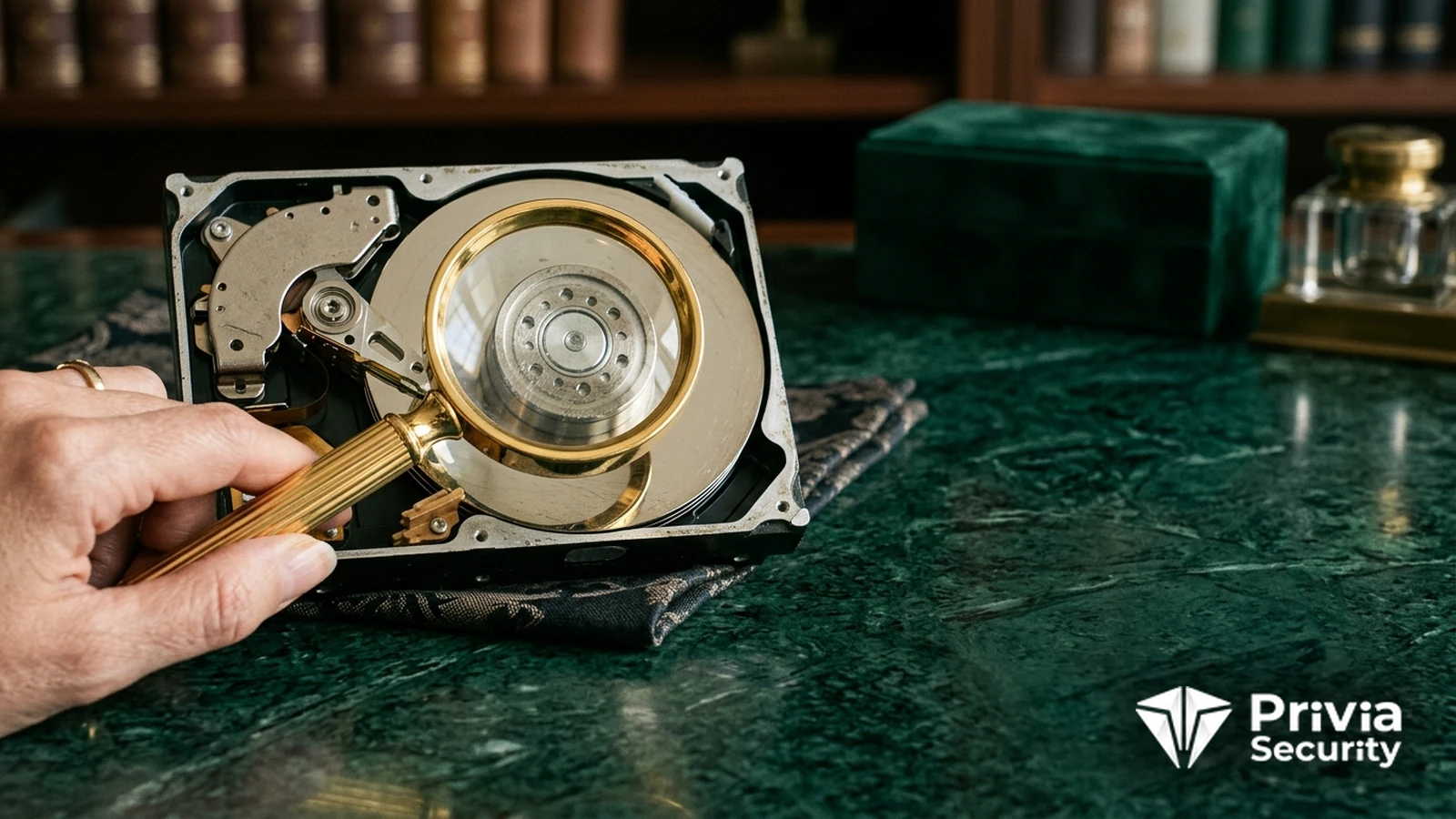
What Is Autopsy?
Autopsy is an open-source digital forensics platform used to examine disk images, removable media, and mobile extractions. It provides a case-based graphical interface over The Sleuth Kit, the command-line file system analysis library written by Brian Carrier, and adds the things an examiner needs around that library: a case structure, ingest pipelines, keyword indexing, timelines, tagging, and report generation.
It matters because it removed the price barrier from competent forensic analysis. A small incident response team, a university course, or a police force in a jurisdiction without a six-figure tooling budget can perform the same core examination that commercial suites perform, with the same underlying parsers.
Work begins with a data source rather than a live machine. Autopsy reads raw dd images, EnCase E01 files, virtual machine disks, and a logical directory of files, and it never writes to the source. The examiner adds the image to a case, selects which ingest modules to run, and lets the pipeline process the volume.
Ingest modules are where most of the work happens. The ones that earn their place in nearly every case are:
.dll extension.The timeline view is the feature examiners return to most. It merges file system timestamps, web history, and parsed artefact events into a single chronology, which is usually how a question such as “what was attached to this machine on the afternoon of 3 March” gets answered.
Autopsy analyses; it does not acquire. The image still has to be taken correctly, with a hardware write blocker or a forensically sound acquisition tool such as FTK Imager, and verified by hash. For large-scale triage across many live endpoints, a collection tool such as KAPE is the right instrument, with Autopsy used afterwards on the systems that justify a full examination.
Against the commercial suites, the honest comparison is this. EnCase, Magnet AXIOM, and X-Ways parse a wider range of mobile and cloud artefacts, handle very large cases more comfortably, and come with vendor support and validation documentation that some instructing parties expect. Autopsy covers the core disk examination well, is extensible through Java and Python modules, and has a multi-user mode backed by PostgreSQL and Solr for team cases. Many practitioners use it alongside a commercial tool and cross-validate significant findings in both, which is good practice regardless of budget.
Tooling does not create admissibility; process does. In England and Wales, examinations that may lead to criminal proceedings are expected to follow the ACPO principles of digital evidence, which require that evidence is not altered, that the examiner is competent to explain what was done, and that an audit trail allows an independent party to repeat the work and reach the same result. Autopsy supports this by logging ingest activity and by keeping the source image untouched, but the chain of custody record, the acquisition hashes, and the examiner’s contemporaneous notes remain the examiner’s responsibility.
Because it is free, Autopsy is also a sensible tool for defenders to learn on before an incident occurs. Imaging a decommissioned laptop and working through it teaches more about which artefacts actually survive than reading about them does.
At Privia Security, our Digital Forensic Incident Response Services combine open-source and commercial tooling under a documented evidential process.
For disk and file system examination, yes. It uses the same Sleuth Kit parsers that have been scrutinised for twenty years, and its findings can be reproduced and cross-checked. Commercial suites offer broader mobile and cloud artefact support, better handling of very large cases, and vendor validation documentation. Practitioners often verify significant findings in a second tool, which is good practice whichever product is used first.
Often. Where file system metadata still references the deleted entry, Autopsy recovers the file directly through The Sleuth Kit. Where the metadata has been reused, the PhotoRec carving module can reconstruct files from unallocated space by signature, though carved files lose their original names and timestamps. Neither approach helps once the underlying blocks have been overwritten or the drive has been trimmed by its SSD controller.
Not natively in any depth. Its focus is disk and file system analysis. Memory examination belongs to Volatility or MemProcFS, which parse process lists, network connections, injected code, and credential material from a RAM capture. A complete investigation usually combines both, since memory holds the volatile evidence that never reaches the disk.
Yes, at acquisition. Autopsy does not modify the image it reads, but the protection has to be applied when the original media is connected, before any image exists. A hardware write blocker, or a verified software equivalent, prevents the operating system from mounting the drive and writing to it. Record the acquisition hash and verify it after imaging.
You May Be Interested In These

We use a few cookies that are needed to make this website work, and they are always on. We would also like to set analytics cookies, to see which pages are useful; functional cookies, so that our live chat works; and advertising cookies, to measure our campaigns. We will not set any of those until you say yes, and you can change your mind at any time from the Cookie Settings link in the footer.
Choose the cookies you are happy for us to use. Strictly necessary cookies are always on; everything else is off until you turn it on.
These cookies keep the website working: they hold your security checks, your form submissions and the choice you make here. The site cannot run without them, so they are always on.
These let our live chat open and remember your conversation, and let the newsletter sign-up work. Switch them off and the chat window will not appear.
These tell us which pages are read and how people find us, so that we can improve the site. The reports are about groups of visitors, never about you personally.
These let us measure our advertising and show you our adverts on other websites, such as LinkedIn, Google and Meta. Switch them off and you will still see adverts, but they will be less relevant.


