

Explore our new Cybersecurity Terms Glossary, explained by our experts.

Explore our new Cybersecurity Terms Glossary, explained by our experts.
Cybersecurity Terms Glossary
OT incident response puts safety and process continuity ahead of containment speed, which changes who makes decisions, what evidence can be collected, and what isolating a system really costs.
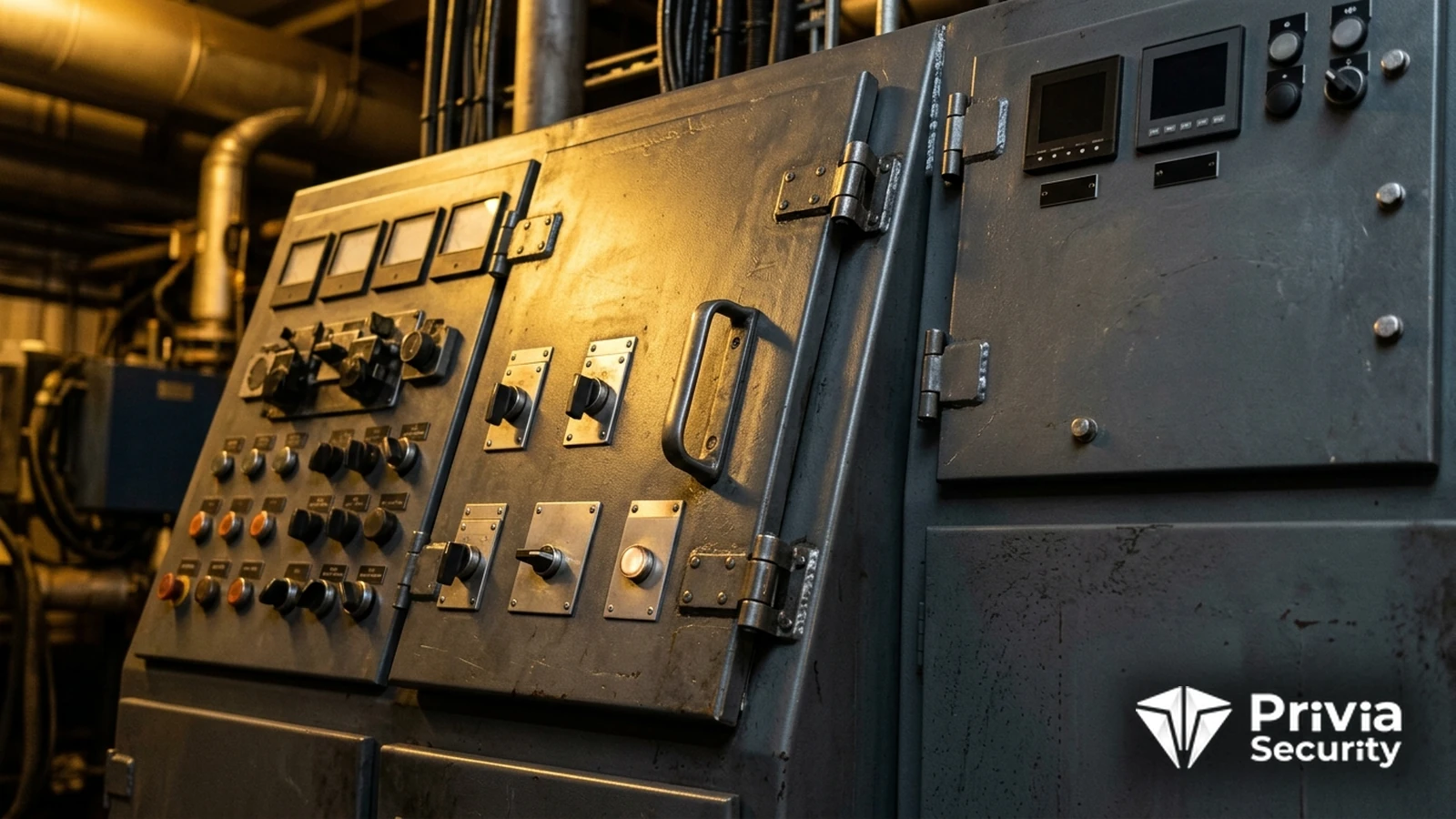
How Does Incident Response Differ in OT?
In an IT incident, pulling a machine off the network is the cheap, obvious first move. In a refinery, isolating a controller can strand a reactor mid-cycle, trip a compressor, or leave a pump running against a closed valve. The techniques of incident response survive the move into an industrial plant; almost every default assumption behind them does not.
IT response optimises for confidentiality and for stopping the spread. OT response optimises for three things in order: nobody gets hurt, the process stays in a defined state, and only then is the adversary removed. A responder who disconnects a historian has caused an inconvenience. A responder who disconnects an engineering workstation that happens to be holding a device in a maintenance override has caused an industrial accident.
Colonial Pipeline in May 2021 showed the consequence of that logic in public. The ransomware was in the business network, but the company shut down pipeline operations deliberately, because it could not be certain which systems were affected or confidently reconcile deliveries. The operational decision was taken for safety and commercial integrity reasons, not because the controllers were compromised.
An OT incident is run by a wider group than a security team. A workable call list includes the plant or operations manager, the control and instrumentation engineer, the process safety engineer, the equipment vendor’s support contact, the health and safety lead, and the regulator liaison. The security analyst advises; the person accountable for the process decides. Writing that down before an incident avoids the familiar argument at hour two about who has the authority to stop a line.
Controllers have no logs worth the name. A PLC may record nothing beyond a mode change counter, and power-cycling it to recover erases volatile state entirely. Practically, the evidence in an OT incident comes from the Windows layer — engineering workstations, HMIs, historians, jump hosts — plus full packet capture if a sensor was already in place. That is the strongest argument for deploying passive network monitoring before anything goes wrong: it is the only source that reconstructs what was said to a controller.
When a device must be preserved, capture the running controller application and compare it with the archived project rather than relying on a checksum alone. Triton, found in a Saudi petrochemical plant in 2017, was discovered precisely because a safety system tripped unexpectedly and engineers investigated the controller’s state.
Eradication in OT ends with a commissioning activity, not a reimage. Restoring controller logic from validated backups, re-verifying I/O, confirming safety functions, and obtaining engineering sign-off all take time that an IT runbook never budgets for. Build the restart sequence into the plan with the people who would actually perform it.
Operators of essential services under the NIS Regulations 2018 must notify their competent authority — Ofgem, the Drinking Water Inspectorate, or the Office of Rail and Road, depending on the sector — of incidents with a significant effect on continuity of service, without undue delay and within 72 hours. If personal data is involved, the separate UK GDPR duty to notify the ICO within 72 hours applies on top. Safety consequences may additionally be reportable to the Health and Safety Executive under RIDDOR. Rehearse those thresholds in a tabletop exercise rather than reading them for the first time during an outage.
At Privia Security, our Investigation and Incident Response Services work alongside your engineering teams, with containment steps agreed in advance against the plant you run.
Not reflexively. A shutdown is itself a hazardous operation and in some processes the restart is the riskiest phase. The decision belongs to operations and process safety, informed by what the security team can and cannot confirm. Prepare the criteria in advance so the conversation during an incident is about facts rather than authority.
Rarely. Most controllers expose no forensic interface, and connecting a programming tool changes state. The practical approach is to capture the running application through the vendor toolchain, preserve network traffic, and perform full forensics on the Windows-based engineering and supervisory systems that interacted with the device.
Operations leads, security advises. The person accountable for process safety has the authority to stop, start, or transfer control, and that cannot be delegated to a security operations centre. Name the role in the plan, name a deputy, and make sure both have the mobile numbers of the control system vendor’s support line.
By being exercised against real plant changes. Review the plan after every major commissioning, run at least one tabletop a year with operations in the room, and test one full restore of an engineering workstation and one controller annually. Plans that are only reviewed as documents drift away from the site within two years.
You May Be Interested In These

We use a few cookies that are needed to make this website work, and they are always on. We would also like to set analytics cookies, to see which pages are useful; functional cookies, so that our live chat works; and advertising cookies, to measure our campaigns. We will not set any of those until you say yes, and you can change your mind at any time from the Cookie Settings link in the footer.
Choose the cookies you are happy for us to use. Strictly necessary cookies are always on; everything else is off until you turn it on.
These cookies keep the website working: they hold your security checks, your form submissions and the choice you make here. The site cannot run without them, so they are always on.
These let our live chat open and remember your conversation, and let the newsletter sign-up work. Switch them off and the chat window will not appear.
These tell us which pages are read and how people find us, so that we can improve the site. The reports are about groups of visitors, never about you personally.
These let us measure our advertising and show you our adverts on other websites, such as LinkedIn, Google and Meta. Switch them off and you will still see adverts, but they will be less relevant.


