

Explore our new Cybersecurity Terms Glossary, explained by our experts.

Explore our new Cybersecurity Terms Glossary, explained by our experts.
Cybersecurity Terms Glossary
IoT security protects internet-connected physical devices, together with the firmware, radios, mobile apps, and cloud services they depend on, from compromise and misuse.
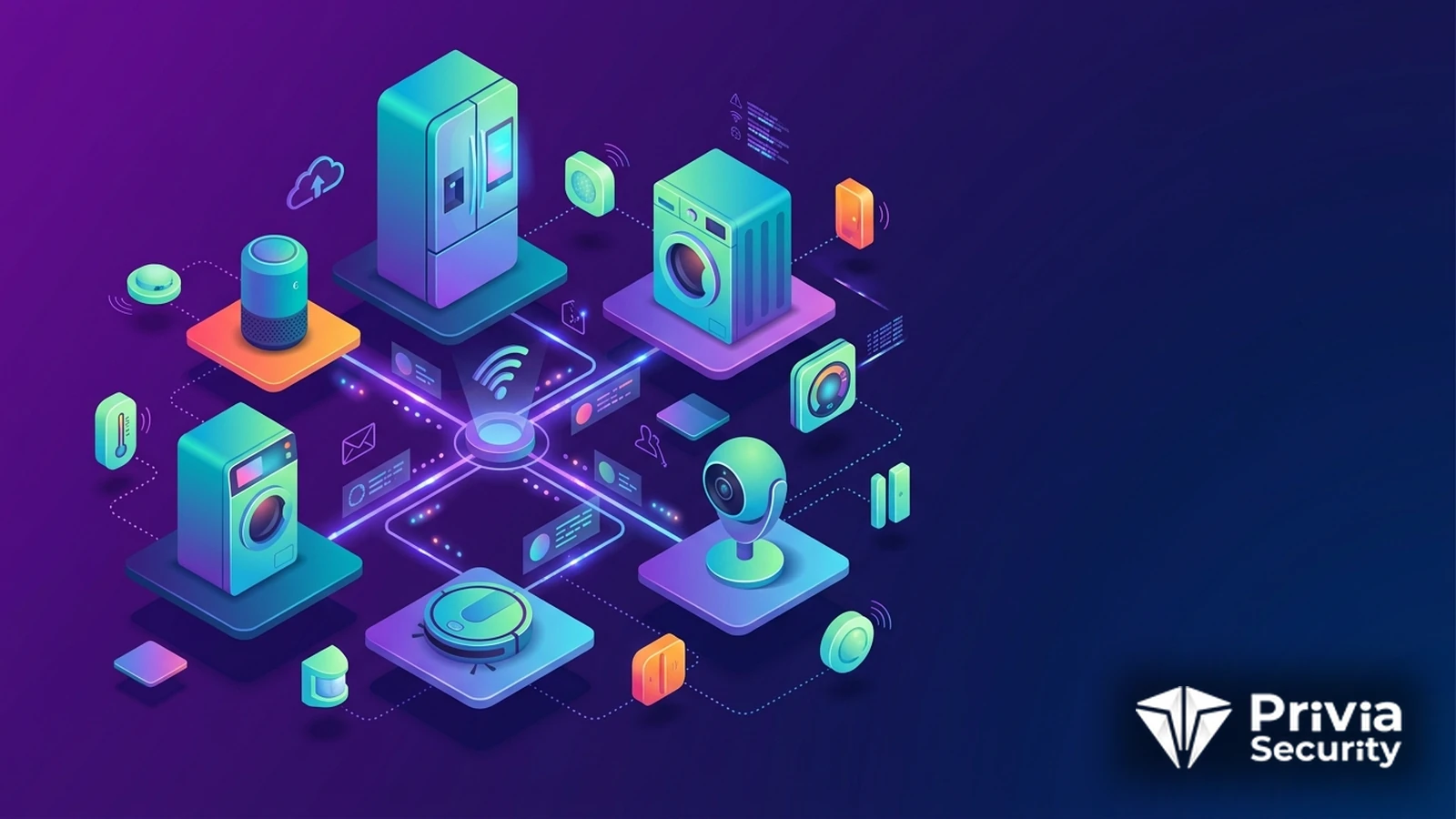
What Is IoT Security?
IoT security is the protection of internet-connected physical devices and everything they depend on: the firmware inside them, the radios they speak over, the mobile app that pairs with them, and the cloud service that stores their data. The discipline exists because a connected doorbell, a building management controller, and a hospital infusion pump share a set of awkward properties that ordinary servers do not — they are cheap, they stay in service for a decade, an attacker can hold them in their hand, and nobody is logged in to notice when something goes wrong.
Scale makes the problem worse. A single flaw in a product line is a flaw in every unit shipped, and the manufacturer may have gone out of business before anyone finds it.
It helps to split the attack surface rather than treat the device as one thing.
Mirai is still the clearest example. The malware spread through routers, cameras, and DVRs by trying a list of 61 factory credential pairs over Telnet. Its source code was published on 30 September 2016, and the botnets built from it produced a roughly 620 Gbps flood against the KrebsOnSecurity site and, on 21 October 2016, the attack on the DNS provider Dyn that took Twitter, Spotify, and Reddit offline across large parts of North America and Europe. Nothing in the attack was sophisticated; the devices simply shipped with passwords nobody changed.
Cloud-side failures reach further. In March 2021, attackers who found an exposed administrative account at the camera company Verkada gained live video from roughly 150,000 cameras in factories, hospitals, schools, and police stations. One credential, one API, every customer.
Britain moved first on consumer devices. The Product Security and Telecommunications Infrastructure Act 2022, brought into force by the Product Security (Security Requirements for Relevant Connectable Products) Regulations 2023, has applied since 29 April 2024. Manufacturers, importers, and distributors selling consumer connectable products in the UK must meet three requirements: no universal default or easily guessable passwords, a published point of contact for reporting security issues, and a stated minimum period during which security updates will be provided. The Office for Product Safety and Standards enforces it, with penalties reaching £10 million or 4% of worldwide turnover.
The requirements derive from ETSI EN 303 645, and the NCSC publishes supporting guidance for both buyers and developers. Industrial and medical devices fall outside the Act, but organisations deploying them are often covered by the NIS Regulations 2018 instead.
At Privia Security, our IoT Penetration Test Services examine the device, its radio interfaces, and its cloud back end together, because in practice the flaw that matters is rarely in the part you expected.
The device is physically available to the attacker, which invalidates most assumptions about trusted storage. It has little memory and no room for agents, so endpoint tooling does not fit. It may run for ten years with no administrator, and the vendor controls patching rather than you. Assessment therefore has to cover hardware, radio, and cloud, not just the software running on the device.
It applies to consumer connectable products made available to consumers in the UK, including many products that businesses also buy, such as routers, cameras, and smart speakers. Purely industrial equipment, medical devices, electric vehicle charge points, and smart meters are excluded. If you sell to UK consumers, the duties fall on you as manufacturer, importer, or distributor.
Only partly, and the honest answer is usually to plan replacement. Compensating controls help: isolate the devices on their own network segment, block outbound internet access they do not need, place a reverse proxy or gateway in front of any management interface, and monitor their traffic for change. None of this fixes an unpatched remote code execution flaw in the firmware.
Firmware extraction and static review, hardware interface testing over JTAG, UART, SPI, and I2C, radio analysis of whatever the device transmits, the mobile or web application, and the cloud API. Testing only the app and the API misses hardcoded keys and debug shells; testing only the hardware misses the authorisation flaws that affect every customer at once.
You May Be Interested In These



We use a few cookies that are needed to make this website work, and they are always on. We would also like to set analytics cookies, to see which pages are useful; functional cookies, so that our live chat works; and advertising cookies, to measure our campaigns. We will not set any of those until you say yes, and you can change your mind at any time from the Cookie Settings link in the footer.
Choose the cookies you are happy for us to use. Strictly necessary cookies are always on; everything else is off until you turn it on.
These cookies keep the website working: they hold your security checks, your form submissions and the choice you make here. The site cannot run without them, so they are always on.
These let our live chat open and remember your conversation, and let the newsletter sign-up work. Switch them off and the chat window will not appear.
These tell us which pages are read and how people find us, so that we can improve the site. The reports are about groups of visitors, never about you personally.
These let us measure our advertising and show you our adverts on other websites, such as LinkedIn, Google and Meta. Switch them off and you will still see adverts, but they will be less relevant.


