
Privia Security was chosen as one of Türkiye's fastest growing companies!

Privia Security was chosen as one of Türkiye's fastest growing companies!
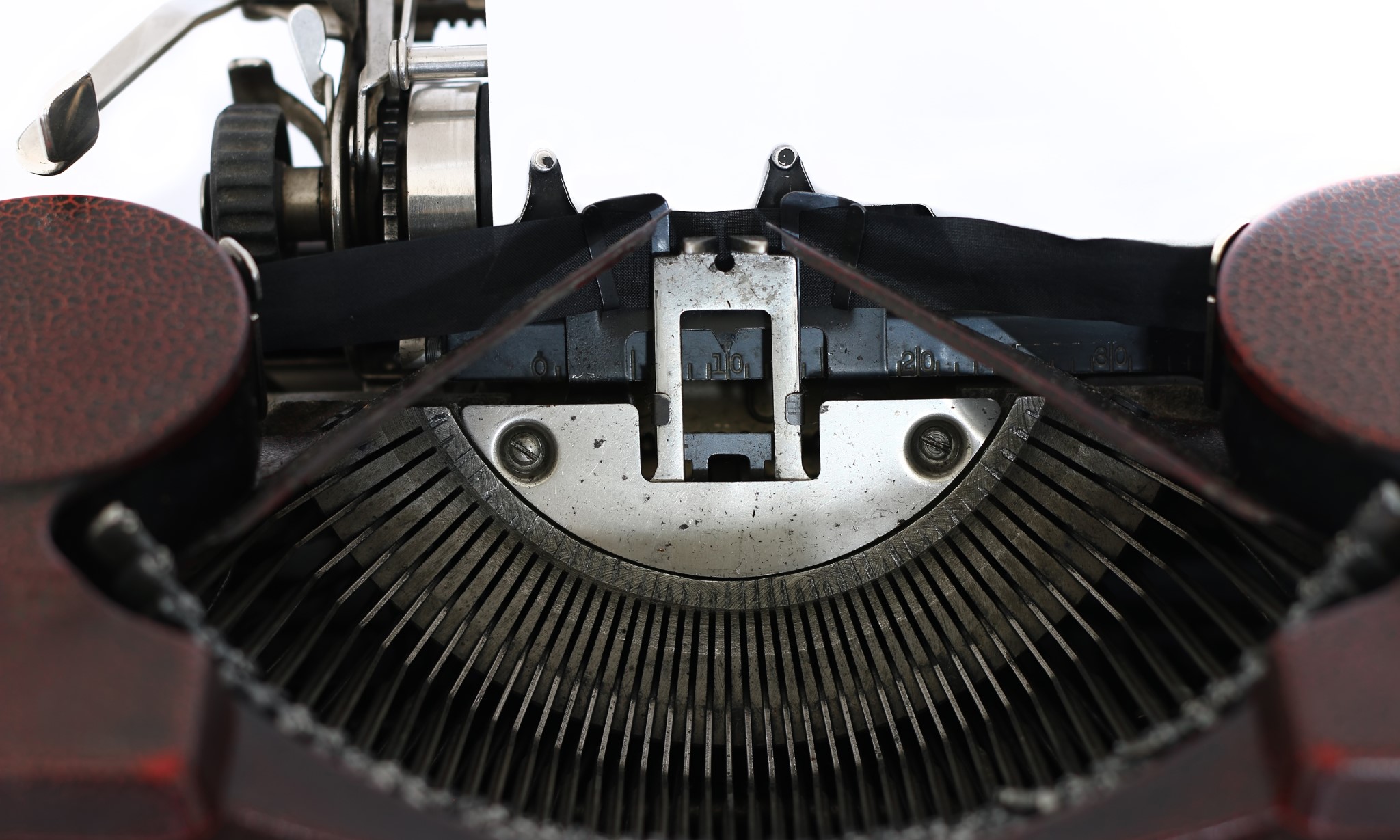
Communication has throughout history been one of humanity’s most important and critical needs. Encryption is a major part of that history. Encrypting communication is a very, very old idea. We communicated before computers and we needed to conceal that communication from third parties. Humanity has throughout history tried and discovered ways to send private communications to meet this need. Although the need for privacy initially arose from military and political requirements, privacy in communication between two people has always been of great importance.
In the past as today, companies and governments have had to keep data secret in order to maintain competitive advantage. In the modern world, people have wanted or been required to keep certain information private, such as medical records and financial records.
For much of human history, private communication meant encrypting written communication. Over the last century, this evolved into radio transmission, telephone communication and computer-to-computer communication. In recent years, encrypting computer-to-computer communication has become essentially ordinary or mandatory. We actually use computer/internet communication in an encrypted form far more frequently than telephone or radio. The digital environment has made it much easier to apply certain types of encryption, while also enabling their wider use.
Whatever the nature of the data you are encrypting or the method of data transmission, the basic concept is actually very simple. The logic is as follows. Messages that are sent or received must be altered in such a way that they cannot be easily read by anyone who intercepts/intercepts/reads your messages without authorisation, but can be easily decoded by the intended recipient.
At this point, we will look at the history of encryption and discuss its methods of development. The methods below have been set aside because they are very old and cannot be used for secure communication today. Even an amateur person in today’s internet world can easily crack the old methods we will discuss in this section. However, these concepts will serve as good examples for understanding the method and logic of encryption.
One of the oldest known and recorded encryption methods is the Caesar cipher. The name is based on the claim that ancient Roman emperors used this method. This method is easy to apply and requires no technological assistance.
The aim of the Caesar cipher is to render text meaningless to those who do not know the method. Let us suppose the text is “Cyber”. When writing the word “Cyber”, the algorithm used is to shift two letters forward in the alphabet.
Text: “CYBER”
Alphabet: A B C D E F G H I J K L M N O P R S T U V W X Y Z
Text produced with Caesar cipher: “FBEHU”
The aim is to make the text unreadable/incomprehensible by changing the positions of the letters. Only the sender and receiver of the message know the algorithm of the encryption. This means that anyone reading the message encounters meaningless words/characters. Methods such as two letters back, two letters forward, or three or four letters have also been used.
Of course, because it has a simple algorithm, it will be easy to crack with a little thought. We must also improve the algorithm to make it harder to break. A linguist can find the most frequently occurring letters in the alphabet. By comparing those letters with the most frequently occurring letters in the message, they can identify which letter has been substituted for which. After these steps, the message is decoded.
Of course, any language has a certain letter and word frequency, meaning some letters are used more often than others. In English, the most common single-letter word is “a”. The most common three-letter word is “the”. With such logic, decoding becomes easier.
Knowing these two features alone can help you crack a Caesar cipher. For example, if you see what appears to be a string of nonsense letters and notice that a three-letter word repeats frequently in the message, you can easily guess that this word is “the”, and the probabilities prove it to be correct.
Additionally, if you notice a single-letter word appearing frequently in the text, it is most likely “a”. You have now found the substitution scheme for a, t, h and e. You can now convert all the letters in the message and try to guess the rest, or simply analyse the substitution letters used for a, t, h and e and try to derive the substitution cipher used for this message. You don’t even need a computer to decipher this type of message.
Caesar ciphers belong to a class of encryption algorithms known as substitution ciphers. The name comes from the fact that each character in the unencrypted message is replaced by a character in the encrypted text.
ROT13 is another single-alphabet cipher. There are 26 characters in the Latin alphabet, and with ROT13 you split the alphabet in half. You end up with two alphabets and a corresponding letter is determined for each. You can then encrypt a word by selecting the corresponding letter for each character.
Text: “CYBER”
Alphabet 1: A B C D E F G H I J K L M
Alphabet 2: N O P R S T U V W X Y Z
In this way, the letter A corresponds to N. The letter B corresponds to O. Looking at the letter C, we see that it corresponds to P. For the letters after M, you continue by selecting from Alphabet 1 in the same way.
Text produced with ROT13 encryption: “PLOSD”
After a time, an improvement called multiple alphabet substitution (also known as polyalphabetic substitution) was developed on the Caesar cipher. In this scheme, you choose more than one number to shift letters (i.e., multiple substitution alphabets). If you choose three substitution alphabets (12, 22, 13), for example, then “A CAT” becomes “C ADV”.
Note that the fourth letter starts again with 12, and that the first A is converted to C while the second A is converted to D. This makes the text harder to decode. Although more difficult than the Caesar cipher, it is not particularly hard to crack. It is simply a straightforward improvement. It can be broken quickly with a computer. In fact, no one today would use such a method to send a genuinely secure message, because this type of encryption is considered very weak.
Polyalphabetic ciphers are more secure than single substitution ciphers. However, they are still unacceptable for modern cryptographic use. Computer-based cryptanalysis systems can easily crack historical cryptographic methods (both single-alphabet and polyalphabetic).
The Vigenère cipher is a polyalphabetic cipher that uses multiple substitutions to disrupt letter and word frequency. Let us take a simple example. Recall that a Caesar cipher has one shift — say, +2 (two to the right). A polyalphabetic substitution cipher would use multiple shifts, perhaps +2, –1, +1, +3. When you reach the fifth letter, you simply start again. So, consider the word “Attack” being encrypted:
At this point, the encrypted text appears as “CSUDEJ”. Given that each letter has four possible substitutions, letter and word frequency is significantly disrupted — making it harder to decode as well.
Perhaps the best-known polyalphabetic cipher is the Vigenère cipher. This cipher was actually invented in 1553 by Giovan Battista Bellaso. It is a method of encrypting alphabetic text using a series of different mono-alphabet ciphers selected based on the letters of a keyword. Bellaso added the concept of using any keyword of one’s choice, thereby making it harder to calculate which substitution alphabet was being selected.
Any discussion of encryption would be incomplete without mentioning Enigma. Enigma is commonly known as a single encryption machine — but this is incorrect. Enigma is not a single machine but a family of machines. The first version was invented by German engineer Arthur Scherbius towards the end of the First World War.
Some military texts encrypted using the first version of Enigma were cracked by Polish cryptanalysts Marian Rejewski, Jerzy Różycki and Henryk Zygalski. Working from the fundamentals, they reverse-engineered an Enigma machine and used this information — including a device known as a cryptologic bomb — to develop new tools for cracking Enigma ciphers.
The core of the Enigma machine was rotors or discs arranged in a circle with 26 letters on each. Essentially, each rotor represented a different single substitution cipher. You can think of Enigma as a kind of mechanical polyalphabetic cipher. The operator of the Enigma machine was given a message in plain text and then typed that message into the Enigma. For each letter typed, the Enigma would produce a different cipher text based on a different substitution alphabet. The receiver could read the plain text by extracting it from the cipher text, provided that both Enigma machines had the same rotor settings.
The Enigma machine actually came in several variants. The naval Enigma machine was eventually cracked by British cryptographers working at the famous Bletchley Park. Alan Turing and a team of analysts — whose story has been the subject of films — managed to crack this newer version of the Enigma machine, changing the course of the war. According to many historians, thanks to Alan Turing, the Second World War was shortened by up to two years.
You May Be Interested In These